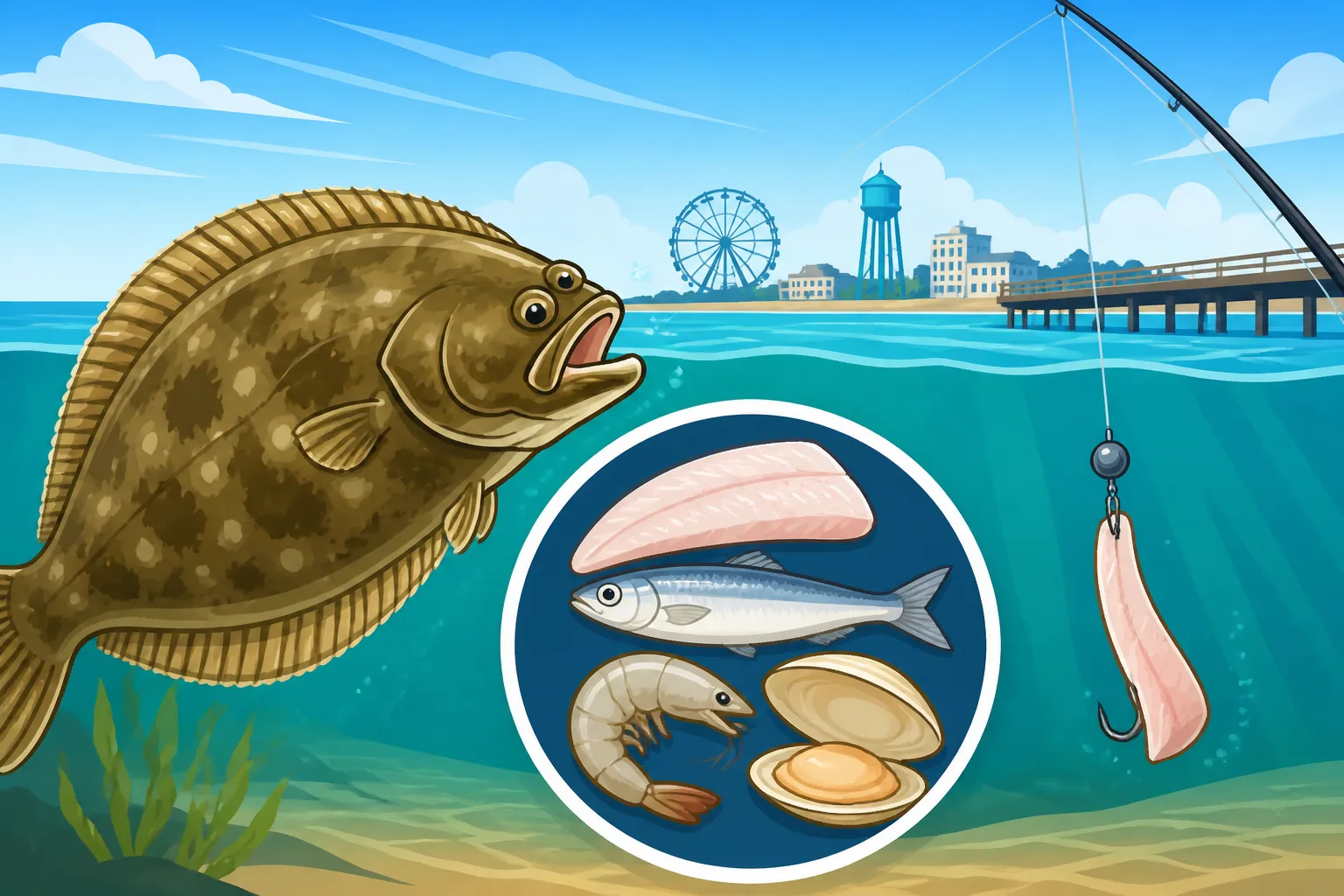
Best Bait for Flounder in Ocean City
If you've ever spent a beautiful day out on the water in Ocean City, Maryland, patiently waiting for that telltale thump of a flounder taking your bait, only to come up empty-handed while the boat next to you reels in keeper after keeper, you know the frustration. Sometimes it feels like there's a secret handshake to getting those delicious flatfish into your cooler. The truth is, while location and technique are huge, choosing the right bait for flounder can make all the difference between a slow day and a successful outing. This guide is all about equipping you with the knowledge to pick the perfect presentation for those elusive Ocean City flounder.
Understanding Flounder Feeding Habits in Ocean City Waters
To really nail down the best bait, we need to think like a flounder. These fascinating fish are perfectly adapted to their environment, and understanding their natural behavior is the first step to outsmarting them in the back bays, inlets, and nearshore waters around Ocean City. They're not exactly chasing down fast-moving prey in open water; their strategy is much more patient and opportunistic.
Why Flounder are Ambush Predators
Imagine a pancake with eyes, perfectly camouflaged against the sandy or muddy bottom. That's essentially a flounder. They bury themselves, often leaving only their eyes exposed, waiting for an unsuspecting meal to swim or drift by. This ambush predator nature means they're not looking for something they have to chase far or expend a lot of energy to catch. Instead, they prefer easy targets. In Ocean City's waters, this often includes small baitfish like minnows or juvenile spot, crabs, shrimp, and squid. If it's small enough to fit in their mouth and looks like a decent meal drifting past, they're likely to pounce. Their flattened bodies and eyes on one side are a marvel of evolution for this exact hunting style, allowing them to survey their surroundings while remaining hidden.
The Impact of Water Conditions on Bait Choice
Just like us, flounder can be a bit finicky, and environmental factors play a huge role in what they're willing to bite. Water clarity, temperature, and current are huge considerations when you're deciding what to tie on.
- Water Clarity: In gin-clear water, flounder rely heavily on sight. This means your bait needs to look as natural as possible. Live bait that swims convincingly or a well-presented artificial with realistic colors will often outperform something less lifelike. Conversely, if the water is murky after a rainstorm or churned up by boat traffic, scent becomes paramount. A strong-smelling bait will help flounder locate it even if they can't see it well.
- Water Temperature: Flounder are cold-blooded, so their metabolism slows down in colder water. They might be less inclined to chase and prefer a slower, more easily accessible meal. In warmer water, they can be more active and aggressive, sometimes striking at faster retrieves or more visually stimulating lures.
- Current: Ocean City's back bays and inlet can have significant tidal currents. Flounder will often position themselves facing into the current, waiting for food to be swept to them. Your bait needs to drift naturally with the current, presenting itself as an easy meal. Too heavy, and it'll just sit there; too light, and it'll get swept away too quickly. This is where mastering your drift, whether by boat or by casting from shore or pier, really comes into play. If you're drifting vs anchoring for flounder in Maryland, consider how the current will affect your presentation.
Natural Baits That Flounder Can't Resist
When it comes to flounder, it's tough to beat the appeal of natural bait. These are the tried-and-true favorites that have put countless flounder in coolers for generations of anglers. The key is often freshness and proper presentation.
Live Minnows and Finger Mullet
If you ask any seasoned flounder angler in Ocean City, live minnows (often called "killifish" or "mud minnows" in bait shops) or small finger mullet are almost always at the top of their list.
- Why they work: The natural movement and vibration of a struggling baitfish are irresistible to an ambush predator like a flounder. They mimic exactly what a flounder is used to eating. The scent trail they put off, combined with their lively action, makes them a prime target.
- How to rig: You want the minnow to stay alive and swim naturally. A common method is to hook it lightly through both lips, from the bottom up, ensuring the hook point is exposed. Another popular rigging is to go through the eye sockets, which keeps the minnow alive longer. For a slightly different action, you can hook it just behind the dorsal fin, allowing it to swim head-down. Experiment with what works best for your specific conditions and how lively your bait is.
- Where to get them: Local bait and tackle shops all over Ocean City, like Bahrs' Mill or Oyster Bay Tackle, usually carry a fresh supply. Sometimes, particularly in the shallow back bays, you can even catch your own with a cast net, especially for finger mullet. Keep them in a livewell or a bucket with an aerator to ensure they stay lively.
- Tips: Lively bait is key. If your minnow isn't wiggling, it's not doing its job. Change it out frequently. If you're using a single minnow on a hook, it's a good idea to let it drift slowly over the bottom.
Strips of Squid and Fish Fillets
For ease of use and availability, cut baits like squid strips and fresh fish fillets are perennial favorites for flounder. They provide excellent scent and a tempting visual appeal.
- Squid: This is a staple in many saltwater anglers' bait boxes. It's readily available at almost any bait shop, relatively inexpensive, and tough enough to stay on the hook through multiple bites from smaller fish. The milky liquid squid releases in the water also creates an attractive scent trail.
- How to cut it: Cut squid into long, thin strips, about 1/4 to 1/2 inch wide and 3-5 inches long. You want a piece that will flutter enticingly in the current, mimicking a small baitfish or a piece of something tasty drifting by. Hook it once through the thicker end, allowing the rest to dangle and wave.
- Fish Fillets: Freshly cut strips of fish like spot, croaker, bluefish, or even bunker (Atlantic menhaden) can be incredibly effective. The fresher, the better, as the natural oils and blood will leak into the water, driving flounder crazy.
- Rigging: Cut strips similar to squid, perhaps a bit wider if using a tougher fish. Hook it once through the skin side to keep it secure. The natural sheen and scent of fresh fish are hard to beat.
- Pros/Cons: These baits are fantastic because they're easy to acquire and rig. They also offer a good scent profile. However, they lack the natural swimming action of live bait, so you often need to impart some movement with your rod to make them more enticing. They also tend to get picked apart by smaller "bait stealers" more easily than live bait.
Peeler Crab and Shrimp
While perhaps less commonly used as a primary flounder bait than minnows or squid, peeler crab and shrimp are absolute flounder delicacies, especially at certain times of the year.
- Peeler Crab: When crabs shed their hard shells, they become "peelers," and flounder absolutely devour them. The soft, exposed meat is incredibly enticing. The downside is that peeler crabs can be harder to find and more expensive than other baits, as they're seasonal.
- Tips: If you can get your hands on them, cut a peeler crab into small, bite-sized pieces and thread them onto your hook. The scent and texture are phenomenal, and few flounder can resist.
- Shrimp: Live or fresh dead shrimp can also be a killer bait. Their natural scent is strong, and their appearance is familiar to many bottom-dwelling fish.
- Rigging: Hook a live shrimp through the tail, or a fresh dead shrimp through the head or a meaty part of the body. They offer great scent, but be warned, other species like small spot and croaker find them equally delicious and might steal your bait before a flounder gets a chance.
- Pros/Cons: These baits are highly effective due to their natural appeal and strong scent. However, their availability and durability on the hook can be limiting factors.
Artificial Baits for Aggressive Flounder
While natural baits are consistently effective, artificial lures have come a long way and can be incredibly productive, especially when tipped with a natural scent or when flounder are actively feeding. They offer the advantage of durability and can sometimes cover more water efficiently.
Gulp! Alive! and Other Scented Soft Plastics
This category has revolutionized flounder fishing for many anglers. Brands like Berkley Gulp! Alive! have successfully combined the visual appeal and action of a soft plastic with a powerful scent attractant that often fools flounder into thinking it's the real deal.
- Why they work: The secret is the proprietary scent formulas embedded in these baits, mimicking the natural smells of marine forage. When combined with realistic shapes and vibrant colors, they become incredibly effective. They look like a baitfish or shrimp, move like one, and smell like one. You can find a wide variety of these options available for purchase on platforms like Amazon.
- Popular types: The "Swimming Mullet," "Shrimp," and "Minnow" patterns are perennial favorites for flounder. Colors like chartreuse, white, pink, and "new penny" (a brownish-orange) are often top producers in Ocean City waters.
- Rigging: These soft plastics are typically threaded onto a jig head, often a bucktail jig for added weight and flash. The jig head provides the weight to get the bait to the bottom and allows for twitching and bouncing motions that mimic a struggling baitfish. They can also be used on traditional flounder rigs as a replacement for natural bait or as an added attractant.
- Tips: Keep your Gulp! baits submerged in their liquid until ready to use to maintain their scent and pliability. They can dry out and lose effectiveness if left in the open air for too long. Experiment with retrieve speeds; a slow, steady retrieve with occasional pauses and bounces is often best for flounder.
Bucktail Jigs with Tipping
The bucktail jig is a classic for a reason – it works! It's versatile, durable, and when properly fished and tipped, it's a flounder magnet.
- Classic and effective: Bucktails mimic a variety of baitfish or even fleeing squid. The pulsating deer hair (or synthetic material) provides subtle action in the water, even when barely moving.
- Tipping is essential: While a bare bucktail might catch a flounder, tipping it significantly increases its effectiveness. A strip of squid, a live minnow, or a piece of a Gulp! bait (like a Gulp! Swimming Mullet or Gulp! Grub) adds critical scent and a larger profile, making it much more appealing. The scent trail draws them in, and the visual of the bucktail seals the deal.
- Colors and weights: Common colors include white, chartreuse, pink, and sometimes combinations. Weights vary greatly depending on the current and depth you're fishing. In the shallow back bays of Ocean City, a 1/4 to 1/2 ounce might suffice, while in the inlet or deeper channels, you might need 1 ounce or more to maintain bottom contact.
- Techniques: The most effective technique is often to "bounce" the bucktail along the bottom. Cast it out, let it sink, then gently lift and drop your rod tip, allowing the jig to skip and fall. This stirs up a little puff of sand or mud, mimicking a struggling baitfish or a foraging creature, which can trigger a flounder's predatory instinct.
Soft Plastic Paddle Tails and Grub Tails
Beyond the scented plastics, traditional soft plastic paddle tails and grub tails can also be effective, especially when paired with the right retrieve and presentation.
- Action: These lures generate vibration and a swimming action from their paddle or curly tails, even at slow retrieve speeds. This subtle movement can be very enticing to a flounder.
- Rigging: They are almost always rigged on a lead jig head. Match the jig head weight to the conditions. For shallower water or lighter currents, a lighter jig head allows for a slower, more natural fall.
- Colors: Natural baitfish colors like pearl white, silver, or light greens are often good choices. Bright colors like chartreuse or pink can also be effective, especially in murky water or on bright sunny days when you want maximum visibility.
- Tips: Just like with bucktails, a slow, bouncing retrieve along the bottom is often the most productive. The key is to keep the lure in the "strike zone" near the bottom where flounder lie in wait. Consider adding a drop of fish attractant spray to these plastics to enhance their appeal.
Combining Baits for the Ultimate Flounder Lure (Flounder Rigs)
Often, the most effective approach to flounder fishing isn't to choose just one bait, but to combine elements to create an irresistible presentation. This is where flounder rigs really shine, bringing together scent, action, and visual appeal.
The Classic Flounder Rig with Live Bait
The standard flounder rig is a staple for a reason: it presents your bait right where flounder are looking for it, and it allows for multiple bait options.
- Description: Most flounder rigs consist of a main leader with a sinker at the bottom, and one or two dropper loops (short leaders) above the sinker, each ending with a hook. This setup keeps your bait near the bottom but slightly elevated, preventing it from getting buried in the mud or sand.
- Adding Attraction: Many rigs come adorned with beads, spinner blades, or small floats near the hooks. These elements add flash, vibration, and buoyancy, making your bait more visible and appealing to a curious flounder. The beads can clack together, the spinner blades catch light and create movement, and the floats keep your bait just off the bottom.
- Using Live Bait: On a classic flounder rig, you'd typically thread a live minnow or a strip of squid onto each hook. This dual presentation increases your chances by offering two distinct targets, or a combination of action and scent. Remember to use circle hooks if you plan on catch and release, as they are less likely to gut-hook the fish. Knowing the Maryland Fishing Size and Catch Limits by Species is crucial here.
Tipping Artificials for Added Appeal
This is where you get to be really creative and combine the best of both worlds. Taking an artificial lure and adding a touch of natural bait can be a game-changer.
- The Power of Scent and Bulk: Think about a bucktail jig. It has great action and profile, but adding a thin strip of fresh squid or a piece of a Gulp! Minnow to the hook adds a powerful scent trail that artificials alone can't always match. The natural bait also adds bulk and a more natural texture, which can entice a flounder to hold on longer after striking. You can easily find a huge selection of bucktails and soft plastics on Amazon to experiment with this technique.
- Enhancing Soft Plastics: Even scented soft plastics, like those from Gulp! Alive!, can benefit from an extra kick. Adding a small piece of live minnow or a dab of fish attractant gel to a Gulp! bait can sometimes make a noticeable difference on a slow bite. It's about layering appeals – sight, sound (from blades/beads), smell, and taste.
Using Scent Enhancers
Don't underestimate the power of smell. Flounder have a keen sense of smell, and a strong scent trail can draw them in from a distance, especially in murky water or low light conditions.
- Sprays, Gels, and Dips: There's a wide array of commercially available scent enhancers specifically designed for fishing. These can be sprayed directly onto artificial lures, rubbed onto natural baits, or used to "recharge" older soft plastics.
- When and Where They Are Most Effective: Scent enhancers are particularly useful when:
- Water clarity is poor: If flounder can't see your bait well, they rely more on scent.
- The bite is slow: A little extra odor can be just enough to tempt a hesitant flounder.
- Using artificials: They add that natural element that artificials often lack.
- Fishing areas with strong currents: The current will carry the scent further, broadcasting your bait's presence to more fish.
Remember, flounder fishing is often a game of patience and finesse. Don't be afraid to try different baits and techniques throughout your day. What works one tide or one day might not work the next. Keep an eye on local conditions, talk to other anglers, and be willing to adapt. And always be mindful of Maryland Flounder Regulations for 2026 and other local rules. Many great fishing spots in Ocean City, from the bay side to the inlet, can be incredibly productive if you present the right bait. Don't forget, for specific locations, check out guides like Fishing the Ocean City Inlet From Shore or Best Piers for Fishing in Ocean City Maryland.
Here’s a quick comparison of some popular flounder bait options:
| Bait Type | Primary Appeal | Durability on Hook | Ease of Acquisition | Best Used When | Considerations |
|---|---|---|---|---|---|
| Live Minnow | Natural action, natural scent | Moderate | Moderate (bait shops) | Flounder are active; clear water | Requires aerated bucket; can be fragile |
| Squid Strips | Strong scent, visual flutter, universally familiar | High | High (any bait shop) | Almost always effective; good for tipping artificials | Lacks natural movement unless jigged; susceptible to small bait stealers |
| Fish Fillets | Strong natural scent, blood trail | Moderate | Moderate (freshly cut) | Murky water; when flounder are feeding aggressively on baitfish | Must be very fresh; less durable than squid |
| Peeler Crab | Irresistible scent and taste | Low | Low (seasonal, costly) | Peak crab shedding season; when flounder are finicky | Very expensive; easily stolen; short shelf life |
| Gulp! Alive! | Powerful scent, realistic action, bright colors | Moderate-High | High (tackle shops, Amazon) | Versatile; good alternative to live bait; can be tipped | Dries out if not in liquid; effectiveness can vary by day |
| Bucktail Jig | Flash, vibration, profile | High | High (tackle shops, Amazon) | When tipped with scent; covering ground, bouncing the bottom | Needs tipping for best results; requires active retrieve |
| Paddle/Grub Tail | Vibration, subtle action | High | High (tackle shops) | Paired with jig head; slow retrieve; adding scent | Less effective without scent enhancer or tipping |
No matter your preferred method, remember that consistent retrieval and keeping your bait in the strike zone are just as vital as the bait itself. Good luck out there, and tight lines! You might also want to look into Maryland Fishing License Age Requirements and other regulations to ensure you're always fishing legally.
Disclaimer
This article is for general informational purposes only and does not constitute professional advice. Laws, prices and regulations vary by location and change over time. Consult a qualified professional for guidance on your specific situation.