Barbless Hook Techniques for Maryland Trout Streams
It can be incredibly frustrating to head out for a peaceful day of trout fishing in Maryland, only to realize you're not entirely sure about the specific hook rules. Many anglers, especially those used to conventional gear, find themselves scratching their heads when confronted with "barbless only" regulations. This guide is here to demystify barbless hook techniques for Maryland's trout streams, helping you understand the rules, adapt your gear, and ensure you're fishing ethically and effectively.
Understanding Maryland's Barbless Hook Requirements
Navigating fishing regulations can sometimes feel like trying to untangle a bird's nest of monofilament. Maryland, like many states dedicated to preserving its precious fisheries, has specific rules regarding hook types, particularly in its designated trout waters. It's not just a suggestion; it's a critical part of conservation efforts aimed at ensuring the health and survival of the fish we all love to pursue. Ignoring these rules can lead to fines, but more importantly, it can harm the very resource we're trying to enjoy.
Where Barbless Hooks Are Mandatory
Not all of Maryland's waters require barbless hooks, which is where some of the confusion often arises. Generally, you'll find these requirements in the state's designated "Trophy Trout" and "Delayed Harvest Trout" streams. These are special management areas where the Maryland Department of Natural Resources (DNR) aims to create high-quality fishing experiences and protect the larger, more vulnerable trout populations. For instance, sections of the Gunpowder River, a renowned trout fishery, and the Savage River are prime examples where you absolutely must use barbless hooks.
It’s always a good idea to check the latest Maryland DNR Fishing and Boating Guide, Explained or specific signage posted at popular access points. Rules can sometimes change or be updated, and staying informed is your best defense against inadvertently breaking them. For instance, during special seasons or in certain "catch and release only" areas, the barbless rule is often strictly enforced to maximize fish survival rates. This ensures that the fish caught by one angler can be caught again, providing enjoyment for many more.
The "Why" Behind Barbless Hooks
At its core, the move towards barbless hooks is driven by a deep commitment to fish conservation and the principle of catch-and-release. A barbed hook, by its very design, is meant to hold securely, often tearing more tissue when removed. This can cause significant injury to a fish's mouth, gills, or throat, leading to stress, infection, or even death, particularly for smaller or less hardy species. Think about the difference between a minor scratch and a deep laceration – that's often the impact a barbed hook has compared to a barbless one.
With barbless hooks, the removal process is far less traumatic. The hook slides out cleanly with minimal damage, allowing the fish to return to the water quickly and with a much higher chance of survival. This is especially crucial in heavily fished areas or those with delicate ecosystems. For those of us who believe in responsible angling, it’s a small adjustment that makes a massive difference in protecting the future of our sport. It aligns perfectly with the ethos of leaving the stream better than you found it, ensuring thriving populations for generations to come.
Converting Your Existing Gear to Be Barbless
You don't necessarily need to go out and buy a whole new tackle box full of hooks just because a stream requires barbless. Most barbed hooks can be easily converted with a simple tool and a little know-how. This is often the most cost-effective and immediate solution for many anglers. It also allows you to keep using your favorite lures and flies, just with a minor modification.
Pinching Barbs on Hooks
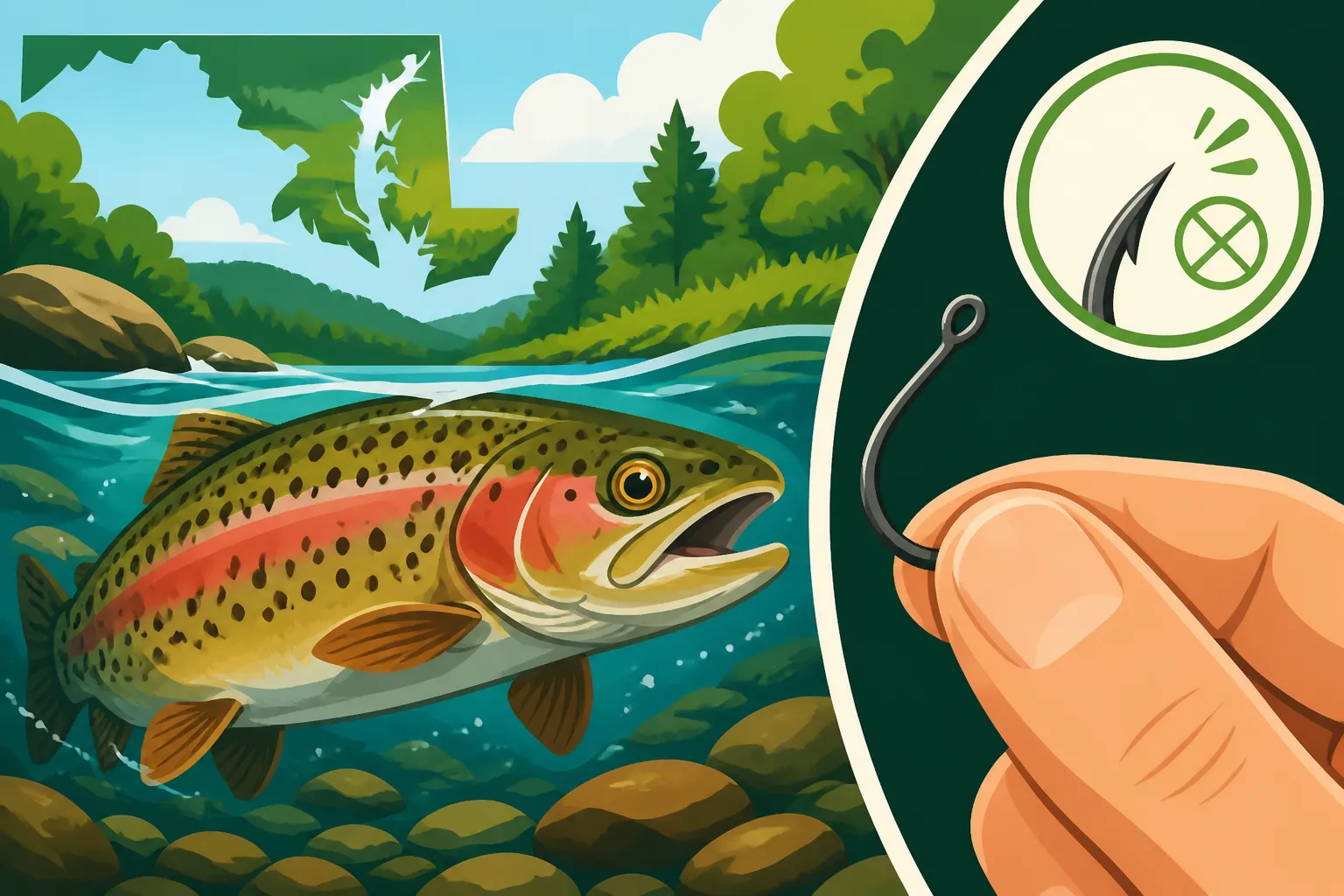
The easiest way to make a hook barbless is to simply pinch down the barb. All you need is a good pair of needle-nose pliers or, even better, a pair of specific fishing pliers with a flat, sturdy jaw. Hold the hook securely and place the jaws of the pliers over the barb, pressing firmly until it lies flat against the shank of the hook. You should feel a distinct "snap" or "crunch" as the metal flattens. Run your finger over the spot; it should be smooth, with no protruding barb.
This technique works for almost all types of hooks – treble hooks on your favorite Rapala, jig hooks for trout, or single hooks on inline spinners. If you're using treble hooks, you'll need to pinch down all three barbs. It might take a moment or two per hook, but it quickly becomes second nature. Many anglers keep a pair of these pliers in their tackle bag, ready for on-the-spot adjustments, ensuring they're always prepared for Maryland's specific requirements, especially in those sensitive trout areas.
Buying Pre-Barbless Hooks
While pinching barbs is effective, many manufacturers now produce hooks that are "factory barbless." These hooks are designed from the ground up to be barbless, often with slightly different shapes or angles to compensate for the lack of a barb and still ensure good hook-ups. Brands like Gamakatsu, Owner, and even some specialty fly-tying hook manufacturers offer a wide selection of barbless options.
Shopping for these can be a breeze; a quick search on platforms like Amazon for "barbless trout hooks" or "barbless fly hooks" will yield plenty of results. This can save you time and ensure a perfectly smooth, barb-free hook every time. Some anglers prefer buying pre-barbless, especially for smaller flies where pinching a tiny barb can be fiddly. It's an investment that pays off in convenience and peace of mind, knowing you're always compliant with regulations in popular spots like the Gunpowder River or the streams around Frederick, Maryland.
Adapting Your Fishing Techniques for Barbless Hooks
Switching to barbless hooks isn't just about the equipment; it also requires a slight adjustment to your fishing technique. Don't worry, it's not a complete overhaul, but a few subtle changes can significantly improve your hook-up ratio and ensure fewer missed fish. The key is to maintain constant pressure and execute precise hooksets.
The Art of the Solid Hookset
With a barbed hook, you might get away with a softer hookset because the barb helps to lodge the hook securely. With barbless, you need to be more deliberate. When you feel a bite, especially from a feisty rainbow or brown trout, deliver a firm, crisp hookset. This isn't about yanking your rod sky-high; it's a controlled, swift movement that drives the hook point deeply into the fish's mouth.
Think of it like setting a nail with a hammer: a sharp, focused strike. Too weak, and the hook might not penetrate enough. Too hard, and you could potentially rip the hook out of the fish's mouth. Practice makes perfect, and you'll quickly develop a feel for the right amount of force. This solid hookset is crucial for establishing a good hold, which is your primary defense against a fish shaking the hook free. This is especially true when fly fishing in Maryland's Delayed Harvest Trout Streams, where trout can be particularly finicky.
Maintaining Constant Pressure
This is arguably the most critical technique to master when using barbless hooks. Once you've hooked a fish, you cannot allow any slack in your line. Even a momentary slack can give the fish the leverage it needs to throw the hook. Keep your rod tip up, creating a constant bend in the rod, and let the rod's flex absorb the fish's head shakes and runs.
When a fish makes a run, don't try to stop it by muscling it in. Instead, let your drag do its job, slowly retrieving line only when the fish pauses or changes direction. Pumping the rod and reeling down should be a smooth, continuous motion, ensuring there’s always tension. It takes a bit of discipline, but once you get the hang of it, you'll be landing more fish on barbless hooks than you might expect. This technique is invaluable whether you're battling a smallmouth bass on the Potomac or a stocked trout in a Maryland Put-and-Take Trout Area.
Fighting Fish Gently and Efficiently
The goal with barbless hooks is to bring the fish to hand as quickly and gently as possible. Prolonged fights exhaust fish, increasing their stress and reducing their chances of survival after release, regardless of the hook type. With barbless, a lengthy fight also gives the fish more opportunities to throw the hook.
Instead of trying to winch in the fish, guide it towards you. Use your rod to steer the fish away from snags and structure. When the fish is close, use a net if possible to scoop it up swiftly. Avoid dragging the fish onto the bank or mishandling it. The less time a fish spends out of water or struggling violently, the better. This gentle approach is a cornerstone of ethical angling and ensures the fish swims away healthy, ready to fight another day.
Benefits Beyond Regulatory Compliance
While the primary motivation for using barbless hooks in Maryland's designated waters is compliance with regulations, you'll quickly discover that there are numerous practical benefits that enhance your overall fishing experience. It's not just about following rules; it's about smarter, more enjoyable fishing.
Easier and Safer Hook Removal
Anyone who has ever had to wrestle a deeply barbed hook out of a fish's gullet knows the struggle. It can be time-consuming, stressful for the fish, and sometimes dangerous for the angler (especially if the fish is thrashing). Barbless hooks, by contrast, slide out with remarkable ease. A quick twist or a gentle push is often all it takes.
This ease of removal is a game-changer for both the fish and the angler. For the fish, it means minimal time out of the water, less physical trauma, and a quicker return to its natural environment. For you, it means less fumbling, less risk of getting poked yourself, and more time actually fishing instead of performing surgery on your catch. It’s particularly beneficial when you’re out on the water solo, without an extra set of hands to help.
Reduced Snagging and Fouling
Here's a benefit many anglers don't anticipate: barbless hooks are less prone to snagging. Think about it: a barb acts like a tiny anchor, catching on weeds, submerged branches, and even your own clothing or fishing net. When you're fishing in brushy streams or areas with heavy cover, a barbed hook can quickly become a nuisance.
Barbless hooks, being smoother, glide more easily over obstacles. This means fewer lost lures, fewer frustrating moments spent trying to free a snagged line, and less time re-rigging. While they won't eliminate snags entirely (nothing does!), they certainly reduce the frequency. This improved efficiency allows you to focus more on the fishing itself, rather than battling the environment, making your time on the water more productive and enjoyable.
Ethical Angling and Conservation Impact
Beyond the practicalities, adopting barbless hook techniques reinforces a strong commitment to ethical angling and contributes directly to the long-term health of Maryland's fisheries. It's about being a steward of the environment, not just a consumer of its resources.
Maximizing Fish Survival Rates
The science is clear: barbless hooks dramatically increase the survival rate of released fish. Studies have shown that fish caught on barbless hooks exhibit less bleeding, suffer fewer injuries, and recover more quickly than those caught on barbed hooks. This is particularly important for species like trout, which can be quite delicate, especially in warmer water conditions or after a prolonged fight.
When you use barbless hooks, you're actively participating in the conservation of fish populations. In areas like Maryland's trout streams, where catch and release is often encouraged or even mandated, ensuring the fish survives to spawn and grow means a healthier fishery for everyone. It's a testament to responsible angling, showing respect for the fish and the ecosystem it inhabits. This dedication to conservation is why rules for trout streams, like those pertaining to Barbless Hook Requirement in Maryland Fly Fishing Zones, are so vital.
Promoting Sustainable Fishing Practices
Embracing barbless hooks is a visible sign of a commitment to sustainable fishing. It sends a message to other anglers, to conservation groups, and to governing bodies that the angling community is serious about protecting its resources. As more anglers adopt these practices, the collective impact becomes substantial.
This shift helps foster a culture of conservation within the fishing community. It encourages discussions about fish handling, water quality, and the broader environmental factors that affect our fisheries. By using barbless hooks, you're not just complying; you're contributing to a larger movement that ensures the joy of fishing can be experienced by future generations. It’s a small change with a ripple effect, strengthening the overall health of environments like the Savage River or the Casselman River, crucial habitats for trout.
Common Misconceptions and Troubleshooting
Even with the best intentions, questions and minor frustrations can arise when transitioning to barbless hooks. It’s completely normal to feel a bit of a learning curve, and addressing common concerns can help smooth the process.
"I'm losing too many fish!"
This is perhaps the most common complaint when anglers first switch to barbless. It's true that a barbless hook provides less "grip," but often, the perceived increase in lost fish is due to technique rather than the hook itself. Revisit the points about solid hooksets and maintaining constant pressure. More often than not, a few tweaks to how you fight a fish will significantly reduce losses.
Another factor could be the size of your hook relative to the fish. Ensure your hook size is appropriate for the species and bait/lure you're using. A hook that's too small might not get a solid bite, while one too large could be difficult for smaller fish to get in their mouth. Experiment with different hook sizes and shapes; sometimes a slightly wider gap or different bend can make a big difference. Don't be afraid to adjust your approach, even consulting with local tackle shop experts who often fish these very same Maryland waters.
"Won't the fish just spit the hook more easily?"
While it might seem intuitive that a fish could dislodge a barbless hook more easily, a properly set and maintained barbless hook is surprisingly secure. Fish primarily throw hooks by using slack line or leveraging the hook against their mouth or obstacles. If you eliminate slack and fight the fish smoothly, the advantage of a barb diminishes significantly.
Consider this: during a vigorous fight, a barbed hook can sometimes create a larger wound in the fish's mouth, especially if the fish twists and turns. This larger wound can actually give the hook more room to slip out. A barbless hook, when set correctly, makes a clean, smaller puncture. As long as constant pressure is applied, it acts like a pivot point that stays in place. It's all about how you handle the fight from the moment of the strike.
Table: Barbed vs. Barbless Hooks Comparison
Here's a quick look at the key differences and considerations when choosing between barbed and barbless hooks:
| Feature | Barbed Hook | Barbless Hook |
|---|---|---|
| Hook Retention | Barb helps prevent dislodgement | Relies on constant pressure & solid hookset |
| Fish Trauma | Can cause significant mouth/gill damage | Minimal damage, cleaner removal |
| Removal Ease | Often difficult, requires tools | Very easy, often finger-removable |
| Snagging Potential | Higher, barb catches on obstacles | Lower, glides over most snags |
| Compliance | Not allowed in specific trout waters | Required in specific trout waters and C&R areas |
| Fish Survival | Lower release survival rates | Significantly higher release survival rates |
| Angler Safety | Higher risk of accidental jabs | Lower risk of accidental jabs |
Ultimately, making the switch to barbless hooks in Maryland's designated trout waters is a testament to both your respect for the regulations and your commitment to the health of the fishery. It might require a small shift in mindset and technique, but the benefits—both practical and ethical—are immeasurable. So, next time you're gearing up for a trip to a stream like the Gunpowder Falls Delayed Harvest Section, make sure those barbs are pinched, and enjoy the cleaner, more responsible fishing experience.
Disclaimer
Please note that fishing regulations in Maryland can change, and it is the responsibility of each angler to stay informed about the most current rules and requirements set forth by the Maryland Department of Natural Resources (DNR). This article is for informational purposes only and should not be considered a substitute for consulting the official DNR fishing guide or website before heading out to fish.