Maryland Black Sea Bass Season and Limit
There's nothing quite as frustrating as heading out for a day of fishing, only to realize you're not entirely sure about the current regulations for your target species. It's a common worry, especially with species like black sea bass where rules can shift, leaving you scratching your head instead of reeling in dinner. This comprehensive guide is here to clear up all the confusion, detailing everything you need to know about the current black sea bass season and limits in Maryland, so you can fish with confidence and stay on the right side of the law.
Understanding Maryland's Black Sea Bass Fishery
Black sea bass are a beloved target for many anglers along the Atlantic coast, and Maryland is no exception. These feisty, delicious fish offer a fantastic angling experience, whether you're a seasoned bottom-fishing pro or a newcomer looking for a tasty catch. Their willingness to bite, combined with their excellent table fare, makes them a highly sought-after species.
The Appeal of Black Sea Bass
For many of us who love to drop a line, the black sea bass holds a special place. They’re not the biggest fish in the ocean, but what they lack in sheer size, they make up for in fight and flavor. Landing a nice "knobhead" (a nickname for larger male black sea bass with a pronounced hump on their head) after a spirited tug-of-war is incredibly satisfying. These fish tend to congregate around structure, making them a predictable target once you find the right spot. Plus, whether grilled, fried, or baked, black sea bass provides some of the finest eating the ocean has to offer. It's truly a rewarding species to pursue.
Identifying Your Catch: What Exactly is a Black Sea Bass?
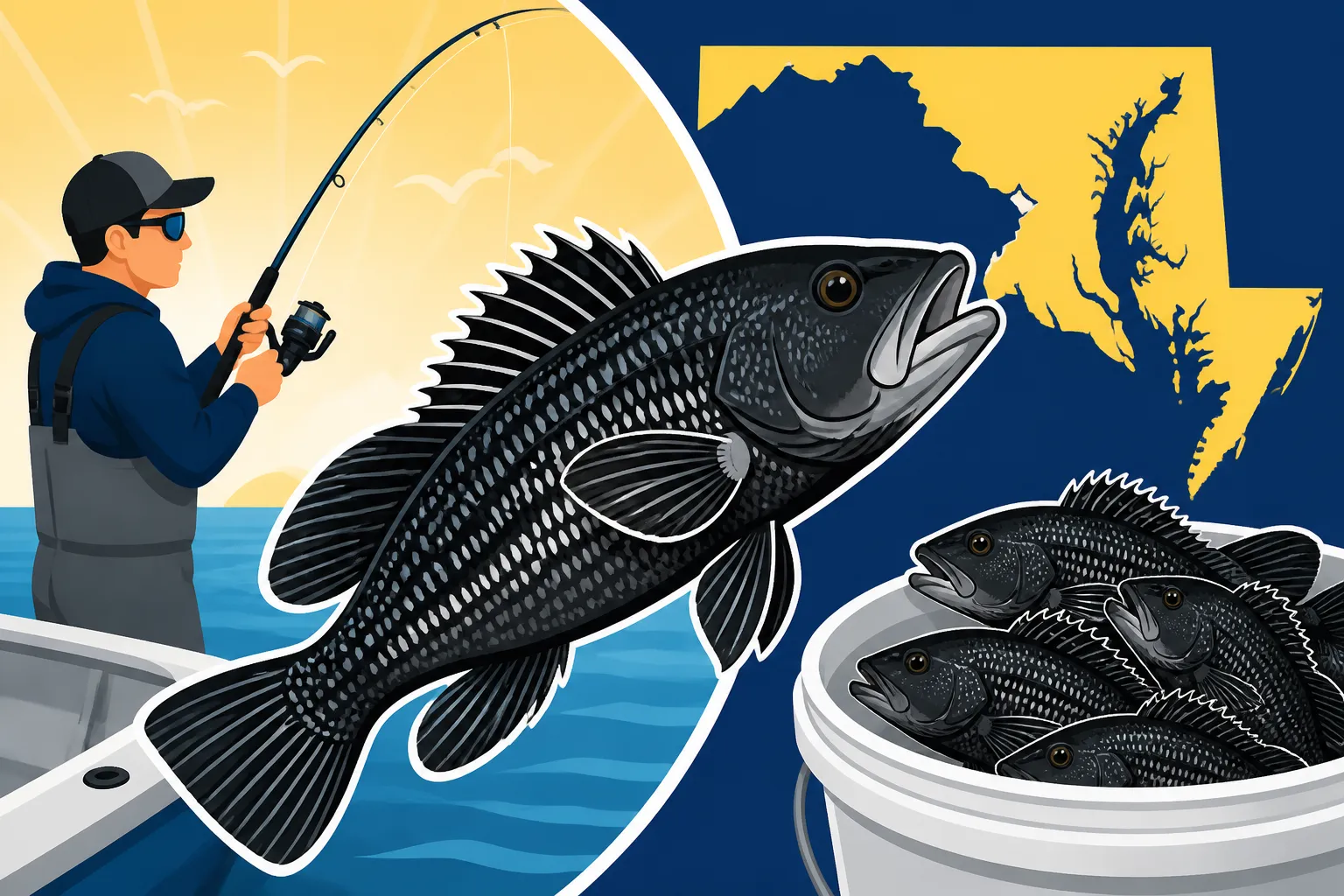
Before you even think about the season or limits, it's crucial to correctly identify the fish you've caught. Black sea bass ( Centropristis striata ) are generally dark brown to black on their backs, fading to a slightly lighter belly. They have large scales and a continuous dorsal fin with sharp spines. A key identifying feature is the filamentous extension on the upper ray of the caudal (tail) fin, especially noticeable in larger specimens. Often, they display mottled patterns of darker and lighter shades, which can change depending on their environment and mood. Younger fish might have more pronounced stripes. While they're often found alongside other bottom fish, their distinctive look usually makes them stand out. Make sure you know what you’ve got before you decide to keep it.
Navigating Maryland's Black Sea Bass Season and Limits
Staying informed about fishing regulations is not just about avoiding fines; it's about being a responsible angler and contributing to the sustainability of our fisheries. The Maryland Department of Natural Resources (DNR) works closely with federal agencies to manage the black sea bass population, ensuring there are plenty for future generations. These rules can sometimes feel a bit like reading legal jargon, but understanding them is straightforward once you break it down.
Current Season Dates: When You Can Target These Tasty Fish
The recreational black sea bass season in Maryland is typically divided into specific periods to manage the harvest effectively. For 2024, anglers eager to target black sea bass in Maryland waters have two primary windows:
- Spring/Summer Season: May 15 through September 15
- Fall/Winter Season: October 1 through December 31
This means there are periods where you cannot keep black sea bass, such as late September and the months outside these specific dates. It's always a good idea to double-check the latest Maryland DNR Fishing and Boating Guide, Explained for any last-minute emergency closures or adjustments that might occur throughout the year. Fishing outside these dates, even if you’re just doing catch and release with the intention of keeping another species, is highly discouraged for regulated fish and could lead to violations.
Size Matters: Understanding the Minimum Length Requirements
One of the most critical regulations for black sea bass, and indeed for many fish species, is the minimum size limit. This rule ensures that fish have a chance to mature and spawn at least once before being harvested, which is vital for maintaining healthy populations. For black sea bass in Maryland, the minimum size limit is 12.5 inches total length.
Total length is measured from the tip of the snout to the end of the caudal (tail) fin, with the fish laid flat. It's not uncommon for anglers to accidentally keep an undersized fish, especially when the bite is hot, or if they haven't accurately measured. Always carry a reliable measuring device on your boat or in your tackle box. Many tackle boxes or fishing tool kits you can find on Amazon come with integrated rulers or you can grab a standalone fish ruler specifically designed for marine species. If a fish is even a hair under the limit, it needs to go back into the water immediately and as gently as possible.
Daily Creel Limits: How Many You Can Legally Keep
Beyond the season and size, there's also a limit to how many black sea bass you can keep per person per day. This is known as the daily creel limit, or bag limit. For recreational anglers targeting black sea bass in Maryland, the daily creel limit is 15 fish per person per day.
This limit applies to each angler onboard, so if you're fishing with a group, each individual can keep up to 15 fish, provided they meet the size requirements and are caught during the open season. It's good practice to count your fish as you keep them to avoid accidentally going over the limit. This is where a good cooler management system comes in handy, perhaps separating your catch into individual bags if you’re fishing with a larger party. Remember that these limits apply regardless of how you caught the fish, be it jigging, bait fishing, or any other method.
To help visualize these crucial regulations, here's a quick summary:
| Regulation Type | Details (2024 Maryland Recreational) |
|---|---|
| Open Season Dates | May 15 – September 15 AND October 1 – December 31 |
| Minimum Size Limit | 12.5 inches (total length) |
| Daily Creel Limit | 15 fish per person per day |
Knowing these numbers by heart, or at least having them readily accessible, will save you a lot of grief and ensure a more enjoyable fishing experience. If you’re ever unsure, consult the official Maryland DNR website or your current fishing regulations guide.
Prime Spots and Effective Techniques for Black Sea Bass
Once you've got the regulations down, the next exciting step is figuring out where to find these fantastic fish and how to entice them to bite. Black sea bass are creatures of structure, preferring hard bottom, wrecks, reefs, and rocky outcrops. They aren't typically found cruising open water, so focusing your efforts on these types of areas will significantly increase your success.
Where to Find Black Sea Bass Along the Maryland Coast
Black sea bass are primarily an ocean-dwelling species, though they can occasionally be found in the lower reaches of the Chesapeake Bay where salinity is higher and suitable structure exists. However, for consistent action and larger fish, your best bet is typically the waters off the coast of Ocean City, Maryland.
- Artificial Reefs and Wrecks: Maryland has an active artificial reef program, deploying everything from old subway cars to barges and concrete structures to create habitat. These spots, often marked on nautical charts, become magnets for black sea bass. Popular examples include the various "reefs" in the Ocean City area, like the African Queen Reef, and the many sunken vessels scattered offshore. These areas provide both shelter and feeding grounds. You can often find charts that detail these spots, and some GPS units have them pre-loaded.
- Natural Hard Bottom: Beyond man-made structures, natural rock outcroppings and shell beds on the ocean floor are prime real estate for black sea bass. These areas might not be explicitly marked but can be found with a good fish finder. Look for sudden changes in bottom contour or density.
- Nearshore Lumps and Bumps: Even smaller ledges, humps, and bumps in relatively shallow nearshore waters can hold good numbers of sea bass, especially during the peak of the season. These are often overlooked but can offer fantastic fishing, especially on days when venturing far offshore isn't feasible. Many anglers find these spots through years of experience or by networking with local fishermen.
- The Ocean City Inlet and Jetties: While not their primary habitat, smaller black sea bass can sometimes be picked up around the rocks of the Ocean City Inlet, particularly at the deeper ends of the jetties. This is an accessible spot for shore-bound anglers, though you’re less likely to find the larger “knobheads” here. For more information on local spots, check out guides on Ocean City Maryland Fishing Guide.
Essential Techniques for a Successful Trip
Black sea bass are not overly complicated to catch, which adds to their appeal. However, a few techniques consistently outperform others.
- Bottom Fishing with Bait: This is the most common and often most effective method. Use a high-low rig or a simple two-hook dropper rig with sufficient weight to hold the bottom. Drop your rig directly onto or very near the structure you've located. The key is to keep your bait close to the bottom where sea bass forage. Once you feel a bite, a sharp hook set is usually all it takes.
- Jigging: When black sea bass are aggressive, jigging can be incredibly productive and a lot of fun. Metal jigs, especially those that mimic baitfish, dropped to the bottom and then sharply lifted and dropped (or "jigged") can trigger a strong reaction bite. The advantage of jigging is that it's active, allows you to cover water more efficiently around structure, and often attracts larger, more aggressive fish. It's a great option for anglers who prefer artificial lures. Many reputable fishing brands offer jigs in various weights and colors, easily found on Amazon.
- Drifting vs. Anchoring: If you're fishing a large wreck or a broad area of hard bottom, drifting can be an effective way to cover ground and find scattered schools of fish. Use your boat's drift to present your baits or jigs over a wider area. However, if you've located a dense school or a specific, small piece of structure, anchoring directly over it can allow you to present your offerings precisely and keep the fish concentrated beneath you. Both approaches have their merits depending on the conditions and the specific fishing spot.
Remember, patience and persistence are always key. If one spot isn't producing, don't be afraid to move and try another piece of structure or a different drift line.
Gear Up: Rods, Reels, and Baits for Black Sea Bass
Having the right equipment can make all the difference in your black sea bass fishing adventure. While you don't need highly specialized gear, a setup that can handle the specific demands of bottom fishing around structure will significantly improve your catch rates and overall enjoyment.
Selecting the Right Tackle for Bottom Dwelling Action
Black sea bass, especially the larger ones, can pull surprisingly hard, and fishing around structure means you need tackle capable of withstanding abrasions and heavy loads.
- Rods: A medium-heavy spinning or conventional rod, typically 6 to 7 feet in length, is ideal. You want a rod with enough backbone to haul fish away from snags and to handle the heavy sinkers often required to hold bottom in currents. A sensitive tip is also a plus, allowing you to detect those subtle bites characteristic of bottom feeders. Look for rods rated for 15-30 lb line.
- Reels: Pair your rod with a reliable reel that has a smooth drag system and sufficient line capacity. A spinning reel in the 4000-6000 size range or a conventional reel like a Penn Squall or Shimano Charter Special would be excellent choices. These reels provide the power needed for bottom dwelling species. Ensure your reel is properly maintained, especially after saltwater exposure, to prevent corrosion. You can find excellent options from brands like Penn, Shimano, or Daiwa on Amazon.
- Line: Braided line in the 20-40 lb test range is highly recommended for black sea bass fishing. Its lack of stretch provides superior sensitivity, allowing you to feel even the lightest bites. It also cuts through the water better, requiring less weight to hold bottom. Always use a monofilament or fluorocarbon leader, typically 30-50 lb test, about 3-5 feet long. This leader provides abrasion resistance against sharp structure and makes your presentation less visible to the fish. When choosing a leader, consider brands like Seaguar or Berkley for their strength and knot integrity.
Bait and Lure Choices That Black Sea Bass Can't Resist
Black sea bass are opportunistic feeders, meaning they'll hit a wide variety of baits and lures. However, some stand out as consistent performers.
- Natural Baits:
- Clam: Fresh surf clam, cut into small, chewable pieces, is arguably the most effective bait for black sea bass. The scent trail it puts out drives them wild.
- Squid: Strips of fresh or frozen squid are another excellent choice. They are durable, stay on the hook well, and are universally appealing to bottom fish.
- Crab: Small peeler crabs or green crabs, cut into pieces, can also be highly effective, especially for larger fish.
- Fish Bits: Small chunks of fresh baitfish like herring, mackerel, or even spot and croaker can work wonders. Many anglers also use cut strips of these fish on their rigs.
- Artificial Lures:
- Metal Jigs: As mentioned, vertical metal jigs are fantastic when sea bass are feeding aggressively. Jigs weighing between 1 to 4 ounces, in colors like silver, chartreuse, or pink, are usually good starting points. Brands like Daiwa, Shimano, and SPRO offer a variety of effective jigs.
- Soft Plastics: Scented soft plastics, especially those mimicking shrimp or small baitfish, can be very effective when tipped on a jig head or a bottom rig. Berkley Gulp! is a popular choice for its scent and lifelike action. They come in various shapes and sizes and can be particularly useful when natural bait is scarce.
No matter your preference, always have a variety of options on hand. What works one day might not work the next, and conditions can change rapidly. Being adaptable is key to consistent success on the water.
Disclaimer
Fishing regulations, including seasons, size limits, and creel limits, are subject to change by the Maryland Department of Natural Resources (DNR) and federal authorities. While this guide provides the most up-to-date information at the time of publication, it is the angler's responsibility to verify current regulations before heading out on the water. Always consult the official Maryland DNR website or their latest printed fishing guide for the most accurate and current rules.