Best Month to Catch Blue Catfish in Maryland
For anglers hoping to tangle with some truly impressive fish in Maryland, knowing when and where to find blue catfish can feel like a bit of a mystery. These invasive giants are abundant, but simply casting a line isn't always enough to guarantee a consistent catch. This guide will dive deep into the seasonal patterns and behaviors of blue catfish in Maryland, helping you pinpoint the absolute best times of year to target them, along with practical tips to maximize your success.
Understanding Blue Catfish Seasonal Behavior in Maryland
Blue catfish are hearty, adaptable fish, which is precisely why they've become so prevalent in Maryland's waterways, especially in the Chesapeake Bay tributaries. Their behavior is heavily influenced by water temperature, food availability, and their spawning cycles, all of which shift throughout the year. Understanding these shifts is key to knowing when and where to find them.
Water Temperature and Habitat Preferences
As the seasons change, so does the water temperature, and blue catfish respond by adjusting their depth and location. In colder months, they tend to congregate in deeper channels and holes, seeking stable temperatures where they can conserve energy. You'll find them holding tight to structures on the bottom, in less turbulent areas. As the water warms, they become significantly more active, spreading out into shallower flats, creek mouths, and even tidal rivers to feed aggressively. They're not afraid of current, often using it to ambush baitfish, but they'll typically seek out areas where they can expend less energy, like the edges of channels or behind underwater obstacles. This invasive species has truly changed the ecosystem of the Chesapeake Bay, and understanding their movements is vital for any angler.
Spawning Cycles and Feeding Frenzies
Blue catfish typically spawn when water temperatures consistently reach the upper 60s to low 70s Fahrenheit, which in Maryland usually means late spring to early summer, often around May and June. During the pre-spawn period, usually in April and early May, they are in a high-energy feeding mode, bulking up for the rigors of spawning. This is often one of the most productive times to target them. Once spawning begins, their feeding can slow down a bit as their focus shifts to reproduction. Post-spawn, however, they quickly regain their appetites, often feeding aggressively again through the summer to recover their strength. This makes them highly catchable for much of the year, with specific peaks driven by these biological imperatives.
The Peak Seasons for Blue Catfish in Maryland
While blue catfish can be caught year-round in Maryland, certain periods offer significantly better chances for consistent action and larger fish. If you're looking for the absolute "best month" to catch blue catfish, you're actually looking for a broader "best season" that offers prolonged opportunities.
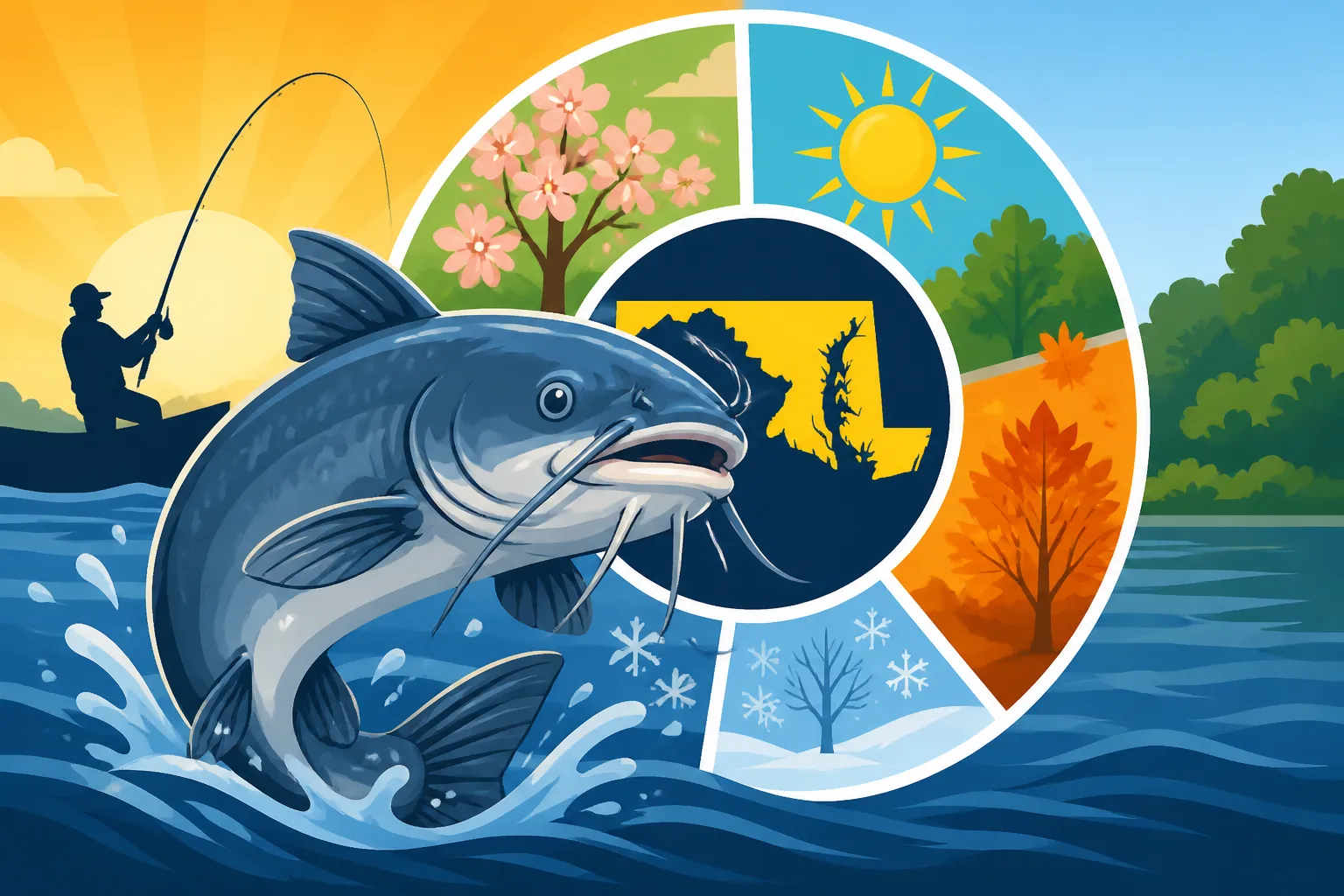
Springtime Surge: Pre-Spawn Power Fishing
Without a doubt, late spring—specifically April and May—is one of the most productive times to target blue catfish in Maryland. As the water temperatures begin to climb into the 50s and 60s Fahrenheit, these fish become incredibly active. They're on the move, migrating from their deeper wintering holes into shallower areas of rivers and creeks to feed heavily in preparation for spawning. This pre-spawn period is characterized by aggressive feeding, making them more willing to take a variety of baits.
During this time, you'll find them pushing up into the shallower sections of tidal rivers like the Potomac River, Patuxent, Nanticoke, and even the Choptank. They'll often stage in deeper bends of creeks, channel edges, and around submerged structures where baitfish are congregating. The cooler spring water also means the fish are often more robust and fight harder. If you're looking to catch a lot of fish, and potentially some of the biggest ones of the year, this is your prime window.
Summer Stability: Consistent Catches with Strategic Approach
The summer months, particularly June, July, and August, offer consistent blue catfish action, although the fishing might require slightly different tactics than in spring. After the spawn, blue catfish continue to feed heavily to recover, and the warm water keeps their metabolism high. They're widely distributed throughout the tidal rivers and even into the fresher sections of the Chesapeake Bay itself.
However, the intense summer heat can push them into deeper, cooler water during the day, or they might become more active during dawn, dusk, and even at night. You might need to focus your efforts on deeper channels, shaded areas, or target them during cooler parts of the day. The sheer abundance of blue catfish in Maryland means that even with slight behavioral changes due to heat, you can still have incredibly productive days, especially if you're exploring different depths and current breaks. Don't forget, there is no size limit on blue catfish, and anglers are encouraged to keep them to help control their population. Understanding why Maryland has no size limit on blue catfish is crucial for conservation efforts.
Fall Feeding Frenzy: Another Peak Opportunity
As the days shorten and water temperatures begin to drop in the fall, typically from September through November, blue catfish embark on another significant feeding spree. Much like the spring, they are driven by the need to bulk up, this time in preparation for the leaner winter months. This can be an incredibly productive time, often rivaling or even exceeding spring fishing in terms of numbers and size of fish.
During the fall, blue catfish will become more active during daylight hours, moving into shallower flats and channel edges to gorge on baitfish. They're often found chasing schools of bait, and their willingness to strike is very high. The cooler, crisp fall air makes for comfortable fishing conditions, and the fish are typically robust and full of fight. This is arguably the second "best" season, offering a sustained period of excellent fishing before winter sets in.
Winter Wonders: Challenging but Rewarding
While not as prolific as spring or fall, catching blue catfish in Maryland during the winter months, from December through March, is absolutely possible and can be quite rewarding for those willing to brave the cold. During this time, blue catfish generally move to deeper, more stable environments, such as deep holes, channels, and scour areas, often congregating in large schools. Their metabolism slows down, so they won't be as aggressive, but they will still eat if the bait is presented properly.
The key to winter success is patience and precise bait placement. Targeting these deep aggregations can lead to days where you catch many fish from a single spot, once you locate the school. The techniques often involve soaking cut bait on the bottom for extended periods, and you might need to use heavier tackle to get your bait down in strong currents. For serious anglers, the winter can offer a unique challenge and the chance to land some truly massive blue catfish that are less active but still hungry.
Maximizing Your Blue Catfish Catch: Tips and Techniques by Month
To truly make the most of your blue catfish excursions in Maryland, it's not enough to know when they're biting; you also need to know how to approach them. The right gear, bait, and strategy can make all the difference, regardless of the season.
Essential Gear and Bait Considerations
When it comes to blue catfish, don't skimp on your tackle. These fish can grow incredibly large—some blue catfish size records in Maryland rivers are truly impressive—and they put up a serious fight. A medium-heavy to heavy action rod, paired with a reliable baitcasting or spinning reel spooled with at least 20-30 lb monofilament or 50-80 lb braided line, is a good starting point. You'll want sturdy hooks, typically circle hooks ranging from 5/0 to 9/0, to ensure good hook sets and minimize gut hooking. Essential terminal tackle includes heavy pyramid or no-roll sinkers (1-8 ounces depending on current) and strong swivels and leaders. You can find a wide selection of durable catfish rods, reels, and terminal tackle on Amazon, often at competitive prices.
For bait, blue catfish are not particularly picky, but fresh cut bait is king. Favorites include gizzard shad, bunker (menhaden), carp, perch, and even chicken breast or liver. For a comprehensive guide, check out the article on the best bait for blue catfish in Maryland rivers. Scent is crucial, so a bloody, oily bait that disperses well in the water is ideal. While they aren't usually targeted with artificial lures, some anglers have success with scent-infused soft plastics fished slowly on the bottom.
Locating Blue Catfish Throughout the Year
The general rule for locating blue catfish is to look for structure and current, then adjust for depth based on water temperature.
- Spring: Focus on channel edges, creek mouths, and shallower flats (10-25 feet) in tidal rivers where they are moving up to spawn. Look for humps, ledges, and submerged timber.
- Summer: During the hottest parts of the day, they'll retreat to deeper channels (20-40+ feet), deep holes, and shaded areas. Early morning, late evening, or night fishing can bring them shallower (15-30 feet) as temperatures cool.
- Fall: Similar to spring, they'll be active in shallower areas (10-30 feet), especially channel edges, humps, and flats where baitfish are abundant.
- Winter: Target the deepest parts of the river channels, particularly large holes, bends, and scour areas (30-60+ feet), where water temperatures are most stable. Often, these deep areas will hold massive schools.
Using a good fish finder is invaluable for locating these deeper channels and identifying schools of fish or suitable structure on the bottom.
Practical Fishing Strategies for Each Season
While the overarching strategy for blue catfish often involves bottom fishing techniques for Maryland catfish, the nuances change with the seasons.
Spring (April-May):
- Strategy: Power fishing the pre-spawn. Anchor upstream of a channel bend or submerged structure and cast large chunks of cut bait down into the current. Let the scent draw them in.
- Locations: Tidal river bends, creek mouths, edges of flats, bridge pilings.
- Tips: Be prepared for strong bites as they are actively feeding. Use heavier tackle.
Summer (June-August):
- Strategy: Seek cooler, deeper water during the day. Consider night fishing or targeting dawn/dusk for shallower action. Drifting cut bait along deep channels can be very effective.
- Locations: Deep river channels, cool water discharges, shaded areas under bridges.
- Tips: Use fresh bait; warm water can spoil it quickly. Stay hydrated and use sun protection.
Fall (September-November):
- Strategy: Similar to spring, but they might be more spread out. Focus on areas where baitfish are abundant, as they are actively chasing food. Anchor or drift, depending on the current and how fish are distributed.
- Locations: Channel edges, flats, humps, any area with good current and bait presence.
- Tips: Pay attention to bird activity or baitfish flicking on the surface; blue cats won't be far behind. This is a great time to learn how to catch blue catfish in the Potomac River.
Winter (December-March):
- Strategy: Find the deep holes and channels where fish are concentrated. Anchor directly over these spots and present bait on the bottom with minimal movement. Patience is key.
- Locations: Deepest river channels, large holes, scour areas near bridge supports.
- Tips: Use heavy sinkers to keep your bait pinned to the bottom in strong currents. Consider using a rod holder with a sensitive tip to detect subtle bites. Warm clothing is essential, and portable heaters can make long waits much more bearable.
| Season | Best Months | Typical Locations | Recommended Bait | General Strategy |
|---|---|---|---|---|
| Spring | April, May | Tidal river bends, channel edges, creek mouths, shallower flats (10-25 ft) | Fresh cut bait (shad, bunker, carp) | Anchor and cast into current breaks, pre-spawn feeding. |
| Summer | June, July, August | Deeper channels (20-40+ ft), shaded areas, nocturnal shallows | Fresh cut bait, chicken liver | Focus on deep spots during day, target dawn/dusk/night. |
| Fall | September, October, November | Channel edges, humps, flats (10-30 ft) with baitfish activity | Fresh cut bait | Active feeding as water cools, similar to spring. |
| Winter | December, January, February, March | Deepest river channels, large holes (30-60+ ft), scour areas | Fresh cut bait | Anchor over deep aggregations, slow presentation, patience. |
Remember, fishing for blue catfish is not just about catching dinner, it's also about helping Maryland's native species by reducing the population of this highly successful invasive fish. Be sure to review Maryland Invasive Fish Rules: Blue Catfish and Snakehead for more details.
Disclaimer
Fishing regulations, seasons, and licensing requirements in Maryland can change. Always consult the latest Maryland Department of Natural Resources (DNR) guide or website before heading out on your fishing trip to ensure compliance with current rules and to obtain the necessary Maryland fishing license. This guide is for informational purposes only.