Maryland Fishing Regulations Guide, Where to Find It
Few things are as frustrating as planning a perfect fishing trip, getting out on the water, and then realizing you're not entirely sure if you're even allowed to fish for what you're catching, or if your hook choice is legal! Maryland's fishing regulations can feel like a tangled mess of rules, seasons, and limits that change more often than the weather. This guide is here to untangle that knot, showing you exactly where to find the most accurate and up-to-date information so you can fish with confidence and peace of mind.
The Maze of Maryland Fishing Regulations
Let's be honest, trying to keep up with all the rules and regulations in Maryland can feel like a full-time job. You're not alone if you've ever found yourself scratching your head, wondering if that rockfish you just caught is within the slot limit or if you even have the right license for the body of water you're on. It's a common struggle, and it's completely understandable.
Why Regulations Feel So Complicated
The complexity isn't arbitrary; it's a reflection of Maryland's incredibly diverse fisheries and the constant effort to balance recreational angling with conservation. We have the vast Chesapeake Bay, tidal rivers, nontidal freshwater lakes, mountain streams, and even the Atlantic Ocean, each with its own ecosystem and species. This means a one-size-fits-all approach simply doesn't work. For example, the rules for fishing a tranquil mountain trout stream are wildly different from those for targeting striped bass in the Chesapeake Bay.
Think about it: you have to consider whether you're in tidal or nontidal waters, which instantly changes the license requirements. Then, you're looking at specific rules for dozens of different fish species—each with their own minimum size, maximum size, daily creel limits, and open seasons. And just when you think you've got it down, a new rule might come into effect mid-season due to conservation efforts or an emergency declaration. It can feel like you need a legal degree just to cast a line without worrying about breaking the law! The Maryland Department of Natural Resources (DNR) works tirelessly to manage these resources, and that often means implementing nuanced rules to protect vulnerable populations while still allowing anglers to enjoy their sport.
The Importance of Staying Informed
While it's frustrating, staying on top of these regulations isn't just about avoiding a hefty fine (though that's a pretty strong motivator!). It's fundamentally about being a responsible angler and contributing to the health of Maryland's aquatic ecosystems. Every rule, from the Maryland Striped Bass Season and Rockfish Rules to the specific requirements for invasive species like snakehead, is put in place to ensure sustainable fishing for generations to come.
Ignoring or not knowing the rules can have serious consequences. For starters, you could face significant financial penalties. Getting caught with an undersized fish or exceeding your daily limit could result in fines that quickly overshadow the cost of any fishing gear. Repeat offenses, or more serious violations, could even lead to the suspension of your fishing privileges. Beyond the legal ramifications, there's the ethical responsibility. Overharvesting or mishandling fish can directly impact population numbers, undoing the hard work of conservationists and fellow anglers. We all want to see healthy fish populations, and that means doing our part to understand and abide by the regulations. Imagine the impact if everyone decided to ignore the Maryland Flounder Size Limit – those delicious flatfish would disappear fast!
Official Sources for Maryland Fishing Regulations
When you need to know the rules, it's crucial to go straight to the source. Don't rely on hearsay or outdated information from a friend of a friend. The Maryland Department of Natural Resources (DNR) is your official, most reliable resource.
The Maryland Department of Natural Resources DNR Website
Without a doubt, the Maryland DNR website is the absolute best and most current place to find fishing regulations. It's updated in real-time for emergency closures and rule changes, making it indispensable for any angler. The site might seem a little overwhelming at first glance, but once you know where to look, it becomes much easier to navigate.
Start by visiting dnr.maryland.gov. From there, look for sections related to "Fishing," "Fisheries," or "Regulations." The DNR usually categorizes information by freshwater, saltwater, or by specific species. You'll find dedicated pages for species like striped bass, perch, catfish, and trout, detailing current seasons, size limits, and creel limits. It's also where you'll find crucial updates on Maryland Striped Bass Season and Rockfish Rules, which can change frequently. The website also provides details on how to get your Maryland Fishing License Guide for 2026, which is the foundational requirement for legal fishing. Keep an eye out for news releases or alert banners right on their homepage, especially during active fishing seasons, as this is where they'll announce emergency closures or sudden regulation shifts. Making it a habit to check the DNR website before every trip is the safest way to ensure you're compliant.
The Annual Maryland Fishing and Boating Guide
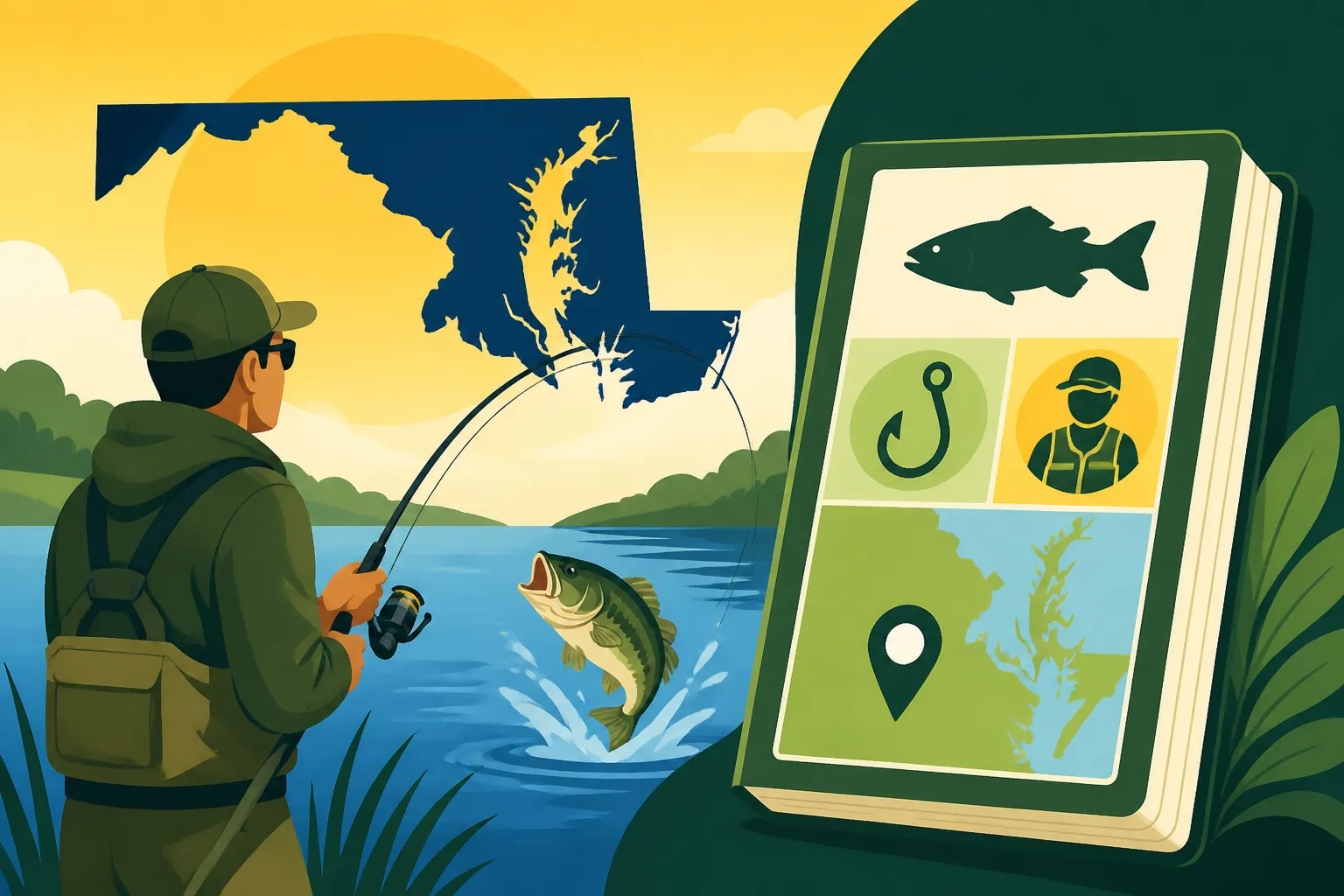
Every year, the Maryland DNR publishes a comprehensive guide that covers all the major fishing and boating regulations. This physical booklet, also available as a downloadable PDF, is an excellent resource for getting a broad overview of the rules, licensing requirements, and general information about fishing in the state. For a detailed breakdown of what's inside, you can check out the article on Maryland's DNR Fishing and Boating Guide, Explained.
The guide typically includes detailed sections on license types (like the difference between a Maryland Nontidal vs Tidal Fishing License, Explained), specific regulations for a wide array of species, information on invasive species like the Maryland Blue Catfish Possession Rules, and details on free fishing days. While it's a fantastic resource, remember that printed guides have a publication date. This means that if an emergency regulation change occurs mid-year, the printed guide won't reflect it. Always cross-reference any printed information with the DNR website for the absolute latest updates, especially when it comes to species with sensitive populations or rapidly changing seasons.
Digital Apps and Online Platforms
In our increasingly digital world, there are also a number of apps and online platforms that can help you keep track of regulations. While not official sources themselves, many reputable fishing apps pull data directly from state DNR websites, offering a convenient way to check rules on your phone while you're out in the field. Some even offer GPS-enabled features that can tell you if you're in tidal or nontidal waters, or highlight specific zones with unique regulations.
You might also find specialized fishing guidebooks available on Amazon that offer deeper dives into specific species or fishing locations, often including regulation summaries. These can be great for supplemental information, but again, use them as a guide, not the final word on current rules. Online fishing forums and community groups can also be excellent places to ask questions and get advice from experienced local anglers. However, be cautious and always verify any information you receive through these channels with the official DNR website. While a seasoned angler might have great tips, they might not be up-to-the-minute on a recent change to the Maryland Flounder Size Limit.
Navigating Specific Regulation Challenges
Maryland's regulations are complex because the fishing opportunities are so diverse. Understanding the core distinctions is key to staying legal and having a successful day on the water.
Tidal vs. Nontidal Waters: The Critical Distinction
One of the most fundamental distinctions in Maryland fishing regulations is between tidal and nontidal waters. This isn't just a geographical difference; it impacts everything from the type of license you need to the specific rules for certain fish species. Tidal waters are generally those connected to the Chesapeake Bay and the Atlantic Ocean, where the water level fluctuates with the tides. Nontidal waters are typically freshwater lakes, rivers above the tidal influence, and ponds.
The distinction is crucial because separate licenses are often required. For instance, you'll need a different license for the Chesapeake Bay than you would for Deep Creek Lake. Many anglers opt for a Consolidated Sport Fishing License if they plan to fish both environments, but it's vital to understand the specifics. You can learn more about this by reading about the Maryland Nontidal vs Tidal Fishing License, Explained. Even within the same river system, regulations can change dramatically once you cross the tidal line. For example, some sections of the Potomac River are tidal, while others further upstream are strictly nontidal, and the rules for bass or catfish could vary significantly between them. Always know whether the water you're fishing is tidal or nontidal before you cast your first line.
Species-Specific Rules and Exceptions
It would be too easy if all fish had the same size and creel limits! In reality, nearly every species you might target in Maryland has its own set of rules, often with seasonal variations. This is where things get particularly intricate, and it's why checking the regulations for your target species is paramount.
Consider the variability:
- Striped Bass (Rockfish): Maryland's state fish has some of the most complex regulations, with specific seasons, slot limits (e.g., you can only keep fish within a certain size range), and even specific closures in spawning rivers. These rules are frequently adjusted based on stock assessments, so understanding the Maryland Striped Bass Season and Rockfish Rules is critical.
- Trout: For trout anglers, there are designated "put-and-take" areas, "delayed harvest" streams, and "catch-and-release" only sections, each with distinct rules regarding possession limits, tackle, and even barbless hook requirements.
- Invasive Species: For species like Northern Snakehead and Blue Catfish, the regulations are designed to encourage harvest, often with no size or creel limits. In fact, for Northern Snakehead, it's illegal to release them back into the water alive. The Maryland Blue Catfish Possession Rules are very different from native species.
It's not uncommon for a new angler to mistakenly keep an undersized fish of one species because they remembered the rule for a different one. Take the time to look up the exact regulations for every type of fish you hope to catch. This often means scrolling through pages of specific details on the DNR website, but it's a necessary step.
Staying Current with Emergency Changes and Updates
Perhaps one of the most challenging aspects of Maryland fishing regulations is their dynamic nature. It's not a static rulebook; regulations can and do change throughout the year, sometimes with very little notice, especially for species like striped bass. These emergency changes are usually implemented to protect fish stocks when monitoring data indicates a need for immediate action, or sometimes due to federal mandates. This is precisely "Why Maryland Issues Mid-Season Rule Changes."
To stay truly current, merely looking at the annual guide once isn't enough. You need to actively monitor the DNR's communication channels.
- DNR Website: As mentioned, the website is the first place these changes will be posted. Look for "News Releases," "Public Notices," or "Fisheries Advisories."
- Email Alerts: Sign up for email newsletters or alerts directly from the Maryland DNR. This is one of the most effective ways to receive timely notifications about regulation changes, stocking reports, or emergency closures.
- Social Media: Follow the Maryland DNR on their social media channels (Facebook, Twitter, etc.). They often post important updates there, sometimes with helpful graphics or short videos explaining the changes.
While frustrating to deal with, these changes are vital for maintaining healthy fish populations. A sudden closure or change in limits might save a spawning class of fish or prevent overfishing. Being proactive in seeking out these updates will save you a headache and potential legal trouble on the water.
Here's a quick comparison of the common sources for finding Maryland fishing regulations:
| Source | Accuracy | Timeliness | Ease of Use | Depth of Detail | Best For |
|---|---|---|---|---|---|
| Maryland DNR Website | Excellent | Real-time | Moderate to High | Very High | Absolute latest rules, emergency updates |
| Annual Fishing & Boating Guide | Excellent | Annual snapshot | High | High | Overview, general rules, print reference |
| Fishing Apps (Reputable) | Good | Varies by app | High | Moderate | Quick checks on the water, mapping |
| Local Bait & Tackle Shops | Good | Very localized | High (in-person) | Moderate | Local nuances, recent hot info, real-time advice |
| Online Forums/Groups | Variable | Real-time chat | Moderate | Moderate | Community advice, but verify always |
Practical Tips for Anglers
Even with all the official sources, navigating Maryland's fishing regulations still takes a bit of strategy. Here are some practical tips to help you stay informed and legal.
Before You Go: A Pre-Trip Checklist
Preparation is key, not just for a successful catch, but for a compliant one too. Before you even think about heading out the door with your rods and tackle box, take a few moments to run through a quick pre-trip checklist.
First, always confirm your license. Ensure your Maryland Fishing License Guide for 2026 is current and appropriate for the waters you plan to fish. Do Kids Need a Fishing License in Maryland? What about seniors? These are all questions you need to answer before you leave. If you're targeting the Chesapeake Bay, make sure you understand the nuances of the Maryland Chesapeake Bay Sport Fishing License Explained. If your license has expired, the process for Maryland Fishing License Renewal is straightforward, often available online. Beyond your license, physically check the DNR website or your trusted fishing app for the most current regulations for your target species and location. Even if you checked yesterday, a quick peek before you leave ensures you haven't missed a last-minute advisory. Also, think about the weather. Not directly regulation-related, but sudden storms can certainly cut a trip short and impact fish behavior, indirectly affecting your strategy. Finally, ensure you have all the necessary documents to buy a Maryland Fishing License, if you need to purchase or renew.
On the Water: Having Regulations Handy
It's one thing to check the regulations at home, but what if you're out on the water and catch something unexpected, or realize you're unsure about a specific rule? Having the information readily accessible is crucial.
Many anglers find it helpful to print out the relevant pages from the DNR website or the annual guide specific to their target species and location. Keep these in a waterproof bag in your tackle box or boat. Even better, bookmark the Maryland DNR's fisheries regulation page on your smartphone. You can often find waterproof cases for your phone on Amazon to keep your digital regulations safe and accessible, even if you accidentally drop your phone in the drink. Having the rules literally at your fingertips means you can quickly verify a size limit or creel limit before deciding to keep or release a fish. Remember, ignorance of the law is not an excuse, and game wardens are frequently patrolling Maryland's waters. Being able to demonstrate that you are making an effort to comply goes a long way. This proactive approach can potentially save you from Maryland Fishing License Penalties for Violations.
Learning from Others and Community Resources
While official sources are paramount for legal compliance, the local angling community can provide invaluable real-time insights and practical advice. Bait and tackle shops, in particular, are often hubs of local knowledge. The people working there are usually avid anglers themselves and are typically up-to-date on local conditions, what's biting, and sometimes even recent regulation interpretations or enforcement patterns. They're often the first to hear about localized issues or nuances that might not be immediately apparent on the statewide DNR website.
Joining local fishing clubs or online communities can also be beneficial. Many anglers discuss regulations, local hot spots, and gear – from rods to reels, even specialty tackle boxes – on platforms like Amazon, where product reviews often share insights. These groups can share experiences with recent regulation changes or offer tips on how best to comply while still enjoying your time on the water. Just remember to always take advice from unofficial sources with a grain of salt and cross-reference it with the official DNR regulations before making a decision that could impact your legal standing. Using these community resources as a supplement to official information will make you a more informed and successful angler.
Disclaimer
The information provided in this guide is for general informational purposes only and is not intended as legal advice. Fishing regulations in Maryland are subject to change, and while we strive to provide accurate and up-to-date information, it is the angler's sole responsibility to consult the official Maryland Department of Natural Resources (DNR) website and publications for the most current and authoritative regulations before engaging in any fishing activities. Compliance with all federal, state, and local laws and regulations is mandatory.