Reporting a Maryland Fishing Violation
It’s a frustrating scene we’ve all witnessed: someone out on the water or by the shore, clearly flouting the rules that protect our precious fish stocks. Whether it’s keeping undersized rockfish, hauling in too many blue crabs, or simply fishing without a license, these actions undermine conservation efforts and can make your blood boil. This guide is here to empower you with the knowledge and steps needed to effectively report a fishing violation in Maryland, helping to preserve our waterways for generations to come.
The Frustration: Recognizing a Fishing Violation in Maryland
As responsible anglers, we invest time, money, and effort into understanding the rules and regulations. It’s a point of pride to fish ethically and sustainably. So, when you see someone else blatantly disregard those same rules, it’s not just annoying; it feels like a personal affront to everything you stand for. It’s crucial to understand what truly constitutes a violation before you decide to report it, not just to ensure your report is accurate, but also to confirm your suspicions are grounded in fact. Maryland’s fishing rules are extensive, covering everything from specific species limits to gear restrictions, and they change periodically. Staying informed is key.
Understanding Common Infractions
Most fishing violations fall into a few common categories, and these are often the easiest to spot if you know what to look for. One of the most frequent is license violations. Think about it: every angler over a certain age needs a valid license, whether they're fishing in tidal waters, nontidal areas, or even just from a pier that doesn't have a blanket permit. If you suspect someone is fishing without the proper credentials, that’s a clear red flag. You can learn more about specific requirements in a comprehensive guide like our Maryland Fishing License Guide for 2026. Sometimes, people assume that if they’re just doing catch-and-release, they don’t need a license, but that's a common misconception.
Another hugely important area is size and creel (catch) limits. We have these rules for a reason: to allow fish to reach maturity and reproduce, ensuring healthy populations. The sight of someone stuffing their cooler with undersized striped bass, or clearly having more than the daily limit of white perch, is particularly disheartening. These rules are usually well-published in the annual fishing guide and on the Maryland Department of Natural Resources (DNR) website. For instance, knowing the Maryland Fishing Size and Catch Limits by Species is fundamental to both your own compliance and recognizing when others are not. Keep an eye out for folks attempting to hide fish, or those who seem to be fishing during closed seasons, especially for highly regulated species like rockfish. Specific regulations, such as the Maryland Striped Bass Season and Rockfish Rules, are put in place for conservation and violating them can have a significant negative impact.
The Impact of Invasive Species Violations
Maryland has a serious challenge with invasive species like the blue catfish and the northern snakehead. These fish are incredibly resilient and can outcompete native species, disrupting delicate ecosystems. Because of their threat, there are very specific rules about what you must do if you catch one. For example, if you catch a snakehead, it is illegal to release it back into the water. In fact, anglers are encouraged, often required, to harvest these fish and report their catch. This makes violations regarding invasive species particularly concerning.
Seeing someone intentionally release a live snakehead, or transport one alive, is not just a minor infraction; it's an act that directly harms our waterways and the native fish we cherish. The rules surrounding Maryland Invasive Fish Rules: Blue Catfish and Snakehead are stringent for a reason. Understanding these rules is critical not only for your own fishing practices but also for being an effective steward of Maryland's aquatic environments. It’s not about being a "tattletale," it’s about protecting the natural resources that provide us all with incredible recreational opportunities. When you observe such a violation, you're not just reporting a rule-breaker; you're actively participating in conservation.
More Egregious Acts: Poaching and Commercial Violations
While many violations are by individual recreational anglers, there are more serious offenses that can have a much larger, more devastating impact. Poaching, for instance, involves taking fish illegally, often in large quantities, outside of seasons, or using prohibited methods. This could be anything from illegal netting to electrofishing, or even just taking fish from closed areas. These acts are not just minor slip-ups; they are criminal activities designed to exploit resources for personal gain, usually commercial, and they can severely deplete fish populations in short order.
Sometimes, violations can also involve commercial fishing operations that fail to adhere to their specific licenses, quotas, or gear restrictions. While most commercial operators are highly professional and follow the rules, a rogue operator can cause immense damage. Spotting these can be harder for the average recreational angler, but if something seems off—like an unusually large haul of out-of-season fish being transported, or commercial gear in prohibited areas—it warrants a closer look and potentially a report. These large-scale violations often require dedicated investigative resources, which is why your initial report, no matter how small it seems, can be the critical first step in uncovering a broader problem.
Why Your Report Matters: Protecting Maryland's Fisheries
It's easy to think, "Oh, it's just one person, what difference does it make?" or "Someone else will report it." But that kind of thinking leads to unchecked violations, which accumulate and chip away at the health of our fisheries. Every single report from an ethical angler contributes to a larger picture, helping the Maryland Natural Resources Police (NRP) identify hotspots, specific individuals, or emerging trends in illegal activity.
Imagine if everyone who broke the rules got away with it. Our fish populations would dwindle rapidly, and the joy of fishing in Maryland, from the mighty Chesapeake Bay to our pristine mountain streams, would be severely diminished. Your report is a vital piece of the conservation puzzle. It demonstrates that the angling community cares deeply about the sustainability of these resources and is willing to step up and defend them. Without active engagement from the public, enforcement agencies are often stretched thin and cannot be everywhere at once.
The Ecological and Economic Ripple Effect
When someone illegally keeps undersized fish, those fish don't get a chance to grow larger or, more importantly, to spawn. This directly impacts the next generation of fish. Over time, repeated violations can lead to a decline in fish numbers, smaller average sizes, and a less vibrant ecosystem. For species like striped bass, which are already under intense management, every illegal fish removed from the system has consequences. It can affect future fishing opportunities, stricter regulations, and even reductions in commercial quotas.
Beyond the ecological impact, there's an economic ripple effect. Maryland's fishing industry, both recreational and commercial, supports countless jobs, from tackle shops and marinas to charter boat captains and seafood restaurants. When fish stocks suffer due to illegal activities, these businesses feel the pinch. Tourism, which relies heavily on the draw of abundant fishing, can also decline. By reporting violations, you're not just protecting fish; you're safeguarding livelihoods and a significant part of Maryland's economy and cultural heritage. The more ethical anglers we have, the better our chances of sustaining these resources for everyone.
Supporting Enforcement and Sustainable Practices
The Maryland Natural Resources Police (NRP) are the dedicated officers on the front lines, enforcing fishing and boating regulations. They patrol our vast waterways, from the Chesapeake Bay to inland lakes and rivers. However, with the sheer size of the area they cover and the number of anglers out there, they can't possibly catch every single violation. This is where you, the informed angler, come in. Your eyes and ears on the water are invaluable.
A timely and accurate report from a concerned citizen can direct NRP officers to specific locations or individuals, allowing them to intervene and prevent further damage. It also acts as a deterrent. When word gets around that violations are being reported and acted upon, it makes potential rule-breakers think twice. This active participation from the public reinforces a culture of compliance and supports the broader goals of sustainable fishing. Remember, enforcement isn't just about punishment; it's about ensuring fair play and the long-term health of our natural resources, which ultimately benefits everyone who loves to fish in Maryland. You might even consider familiarizing yourself with Maryland Fishing License Penalties for Violations to understand the gravity of the infractions you might be reporting.
How to Make a Report: Your Step-by-Step Guide
Deciding to report a violation can feel a bit daunting. You might wonder if it’s worth the trouble, or if your report will even be taken seriously. The key is to provide clear, concise, and specific information. Think of yourself as a witness providing details that an investigator can use. The more accurate and thorough your observations, the more effective your report will be. Don't confront the individual; your safety is paramount. Simply observe, document, and report.
Gathering Critical Information for Your Report
Before you even think about picking up the phone or typing an email, take a moment to gather as much detail as you can safely and discreetly. This information is the backbone of your report and will greatly assist the NRP in their investigation.
Here’s a checklist of vital details to collect:
- Date and Time: Exactly when did you observe the violation? This helps establish a timeline.
- Specific Location: Be as precise as possible. Instead of "near the bridge," try "south side of the Route 50 bridge, about 200 yards west of the fishing pier." GPS coordinates, if you can safely obtain them, are incredibly helpful. If it’s a specific landmark or public access point, mention that. For example, if it's a known fishing spot, mention Fishing Sandy Point State Park or Fishing Point Lookout State Park.
- Description of the Violation: What exactly did you see? Was it undersized fish being kept? Too many fish? Fishing during a closed season? Illegally releasing invasive species like a snakehead, which can carry serious Fine for Transporting a Live Snakehead in Maryland? The more detail, the better.
- Description of the Individual(s): How many people? What did they look like (gender, age range, clothing)? Any distinguishing features?
- Vessel/Vehicle Description: If they were on a boat, note the boat type (e.g., center console, bass boat, kayak), color, name (if visible), and most importantly, the registration number (MD number). If it was a vehicle, note the make, model, color, and license plate number. These are often the most crucial pieces of information for identification.
- Gear Used: What kind of fishing gear were they using? Rod and reel, trotline, net, cast net? This can be relevant to the type of violation.
- Photographic or Video Evidence: If you can safely and discreetly snap a photo or video, this can be extremely powerful evidence. Just ensure your own safety and privacy while doing so. Never put yourself in a compromising situation.
It's helpful to write these details down as soon as you can after observing the event. Memories can fade, and precise details can get muddled.
| Information Category | Specific Details to Collect | Importance |
|---|---|---|
| When? | Date, Time (e.g., 2026-06-15, 10:30 AM) | Establishes timeline for investigation |
| Where? | Exact Address, GPS Coordinates, Landmark (e.g., "North Point State Park jetty") | Directs NRP to the precise location |
| What? | Type of violation (e.g., "kept 3 undersized striped bass," "releasing snakehead") | Clearly defines the nature of the infraction |
| Who? | Number of individuals, physical description, clothing | Helps identify suspects if they are still present |
| How? | Gear used (e.g., "trolling with too many lines," "using gill net") | Provides context for the violation |
| Vehicle/Vessel? | License plate, Boat registration (MD#), Make, Model, Color, Name | Critical for identification and follow-up |
| Evidence? | Photos, videos (taken safely and discreetly) | Powerful corroborating proof |
Contacting the Maryland Natural Resources Police (NRP)
Once you have your information compiled, it's time to make the report. The primary agency responsible for enforcing fishing regulations in Maryland is the Maryland Natural Resources Police (NRP). They have a dedicated system for receiving violation reports, and knowing the right channel is important.
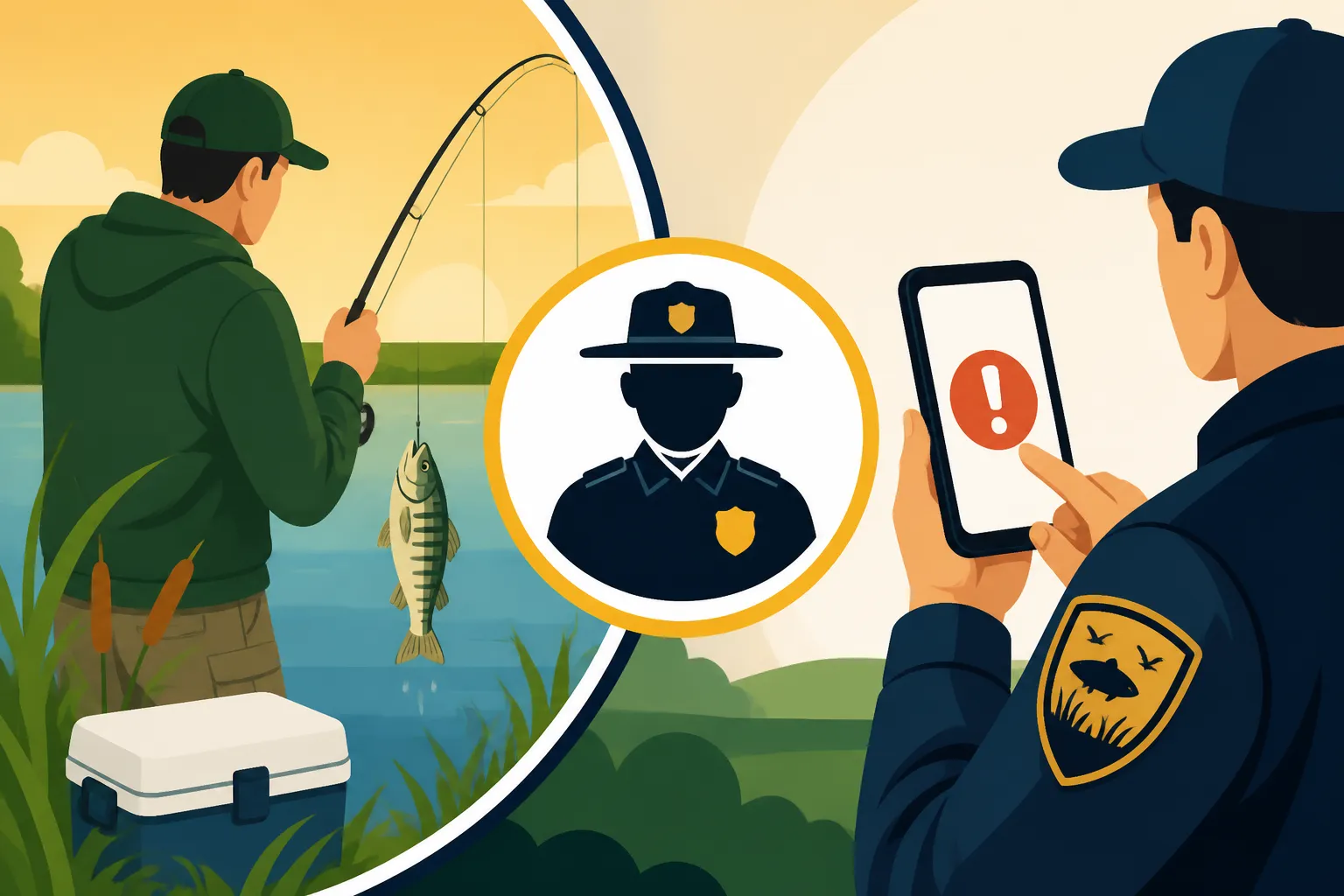
The most direct way to report a fishing violation is to call the Maryland Natural Resources Police (NRP) Hotline. This is your go-to number for immediate or time-sensitive reports. The statewide toll-free hotline is 1-800-628-9944. This number is typically staffed 24/7, making it ideal for situations where officers might still be able to respond to the scene. If you're seeing an active violation, especially something like illegal netting or taking a large number of fish, calling this number is often the most effective method. You'll speak to a dispatcher who will take down your information and relay it to the nearest NRP unit. This hotline is essentially the Maryland Fisheries Complaint and Poaching Hotline.
For non-emergency situations, or if you prefer to submit details in writing (especially if you have photos or videos to attach), you can often find an online reporting form on the Maryland DNR website. Look for a section related to "Report a Violation" or "Contact NRP." While this method might not lead to an immediate response to the scene, it's excellent for providing comprehensive details and evidence for incidents that may not require an instant intervention, or if the perpetrators have already left. It's always a good idea to check the current Maryland DNR website for the most up-to-date contact methods and online forms.
Anonymity and Follow-Up Expectations
Many people worry about reporting a violation because they fear retaliation or simply don't want to get personally involved. Rest assured, you can typically report violations anonymously. When you call the NRP hotline, you can explicitly state that you wish to remain anonymous. If you're using an online form, there's usually an option to submit your report without providing your contact details. The NRP is trained to handle these reports confidentially and prioritizes the safety of those who come forward. They want your information, not necessarily your name on a public record.
Regarding follow-up, it’s important to manage your expectations. Due to the confidential nature of investigations and the sheer volume of calls and reports the NRP receives, you generally won't get a direct call back telling you the outcome of your specific report. They won't tell you if an arrest was made, a citation issued, or if an investigation is ongoing. This isn't a sign that your report wasn't taken seriously; it's simply part of their operational procedure.
However, your report does contribute. It helps build a case, directs patrols, and informs their intelligence gathering. If multiple reports come in for the same area or individual, it raises the priority level. Think of it as providing a piece of a larger puzzle. Even without a personal follow-up, know that your effort contributes directly to the conservation and enforcement efforts in Maryland.
What Happens Next: The Enforcement Process
Once you've made your report, the wheels of justice, or at least enforcement, start to turn. It's not always an immediate, dramatic arrest, but a systematic process designed to investigate and address credible violations. Understanding this process can offer some peace of mind that your report is indeed making a difference, even if you don't see the direct result.
From Report to Investigation
When your report, especially a call to the NRP hotline, comes in, a dispatcher will typically log the details and assess its urgency. If it's an active violation with clear, actionable intelligence (like a boat registration number or a precise location), they will attempt to dispatch the nearest available NRP unit to investigate. Maryland's NRP officers are spread across the state, covering both land and water patrols, and they will prioritize calls based on severity and immediacy.
Upon arrival, if the suspected individuals are still present, officers will observe, gather evidence, and then confront the individuals if appropriate. This could involve checking licenses, inspecting catches, and verifying compliance with all relevant regulations, including current Maryland Fishing Size and Catch Limits by Species or specific gear rules. If the individuals have already departed, the report might still be followed up on. For instance, if you provided a boat registration or vehicle license plate number, officers can use that information to identify the owner and potentially conduct further investigation, perhaps a visit to the person's home or a stakeout of known fishing spots.
For less urgent or more complex reports (e.g., suspected ongoing poaching activity over time), your information might be directed to a specialized investigations unit. They would then use your report, combined with other intelligence, to plan surveillance, gather more evidence, and build a stronger case before taking direct action. This investigative process can take time, sometimes weeks or even months, but it's essential for ensuring a thorough and successful enforcement outcome.
Potential Outcomes and Penalties
If an NRP investigation confirms a violation, there are several potential outcomes, depending on the severity of the offense and the past record of the individual. For minor infractions, such as a first-time licensing issue or a slight overage on a catch limit, an officer might issue a warning. This serves as an educational opportunity and a clear message to comply.
More commonly, especially for blatant or repeated violations, officers will issue a civil citation. This is essentially a ticket that carries a monetary fine. The amount of the fine varies significantly based on the specific regulation broken. For example, catching an undersized striped bass might carry one fine, while fishing without a license (or the wrong license, such as trying to fish tidal waters with only a Maryland Resident Nontidal Fishing License Cost) would carry another. These fines can range from tens to hundreds of dollars. A Maryland Fishing License Penalties for Violations guide can give you an idea of the costs involved.
For more serious offenses, such as large-scale poaching, repeated violations, or illegal possession/release of invasive species like the northern snakehead (where releasing it is specifically Is It Illegal to Release a Snakehead in Maryland?), criminal charges can be filed. This can lead to much heftier fines, potential jail time, confiscation of gear (boats, fishing equipment), and the loss of fishing privileges for an extended period. The NRP works closely with state prosecutors for these cases.
Finally, beyond fines and potential jail time, there's also the administrative process. The Maryland DNR can, and often does, revoke or suspend fishing licenses and permits for serious or habitual offenders. This means the individual would be prohibited from legally fishing in Maryland waters for a specified duration, sometimes permanently. These penalties underscore the state's commitment to protecting its natural resources, and your report plays a vital role in enabling these consequences for those who choose to break the rules.
Disclaimer
The information provided in this guide is for general informational purposes only and does not constitute legal advice. Fishing regulations in Maryland are subject to change. Always consult the official Maryland Department of Natural Resources (DNR) website or their current fishing guide for the most up-to-date and accurate regulations before fishing. If you suspect a violation, report it to the Maryland Natural Resources Police (NRP) using their official channels. Your safety should always be your top priority.