Fishing the Route 90 Bridge in Ocean City
Ocean City offers some truly fantastic fishing, but sometimes the most productive spots aren't always the most obvious. While everyone flocks to the Inlet or the big Fishing Pier, the often-overlooked Route 90 bridge, spanning the Isle of Wight Bay, holds incredible potential for anglers willing to explore. This guide is your insider look at successfully fishing this unique location, detailing the species you can target, the best methods to employ, and crucial tips to make your trip both productive and safe.
The Hidden Potential of the Route 90 Bridge
Many folks drive right over the Route 90 bridge, focused on getting to or from the beach, never realizing the vibrant underwater world it supports. This bridge isn't just a concrete thoroughfare; it's a bustling ecosystem, drawing in a variety of species thanks to its structure and location. For shore anglers, kayak fishers, or even those in small boats, it represents an exciting alternative to the more crowded hotspots.
Understanding the Bridge's Unique Ecosystem
What makes a bridge a great fishing spot, anyway? It comes down to structure and current. The pilings and rip-rap foundations of the Route 90 bridge create an artificial reef system, offering shelter and ambush points for baitfish, crabs, and, consequently, the predatory fish that feed on them. Think of it like a miniature mountain range underwater, providing nooks and cr crannies for everything from juvenile flounder to hefty striped bass. The sheer volume of structure here means there's always something to attract marine life.
Additionally, bridges often act as funnels for tidal currents, concentrating baitfish and making them easier targets for game fish. The ebb and flow of the tide under the Route 90 bridge can be quite strong, flushing food past waiting predators. Knowing how to read these currents and position yourself accordingly is half the battle won, and it’s a skill that pays dividends far beyond just this one spot. The constant movement of water also helps oxygenate the area, keeping it lively even during warmer months when other shallower areas might become less productive.
Accessibility and Angler Opportunities
One of the often-unspoken frustrations with popular fishing destinations is the sheer difficulty of finding a good spot or dealing with crowds. While the Route 90 bridge might not have dedicated fishing platforms like the Ocean City Fishing Pier, its long stretches of accessible shoreline and the ability to fish from kayaks or small boats nearby open up diverse opportunities. Parking can be a bit tricky, but with a little planning, you can usually find spots along the side roads or within short walking distance that grant access to the water's edge.
For those without a boat, fishing from the shoreline near the bridge's approaches, particularly where there are jetties or rip-rap, can be incredibly effective. Just be mindful of private property and navigation channels. Kayak anglers especially love this area because they can easily maneuver around the pilings, reaching spots that larger boats can't. It offers a unique blend of convenience and productive fishing that's often missed by the masses. Don't forget that if you're venturing out on the water, you'll still need to be aware of the navigation rules and stay clear of the main boat traffic lanes, especially during peak season.
Targeting the Prime Species Under Route 90
The varied habitat around the Route 90 bridge supports a diverse array of fish species throughout the year. Knowing what to target and when will significantly increase your chances of a successful outing. This isn't just a place for one type of fish; it's a buffet for anglers seeking different challenges.
Flounder: The Bay's Flatfish Favorite
Flounder are arguably one of the most popular target species around the Route 90 bridge, especially during the warmer months. These delicious flatfish love to lie in wait on the bottom, often ambushing baitfish that drift past the bridge pilings or hide in the eddies. You'll find them congregated around structure, so casting parallel to the bridge pilings or along the edges of the channel where the current slows down can be particularly effective.
The key to flounder fishing here is patience and presentation. A classic flounder rig with a live minnow or a strip of squid is hard to beat. Soft plastic baits, like Berkley Gulp! shrimp or minnows, also work wonders when jigged slowly along the bottom. Remember to pay close attention to the Maryland Flounder Size Limit and Maryland Daily Bag Limits by Species, as regulations can change, and it's essential to stay compliant. The best time to target flounder is often during an incoming tide, as it brings fresh bait into the bay, making them more active feeders. If you're keen on mastering the art of catching these tasty flatfish, our guide on Techniques for Catching Flounder in Maryland's Back Bays offers even more in-depth strategies.
Striped Bass and Bluefish: Opportunistic Predators
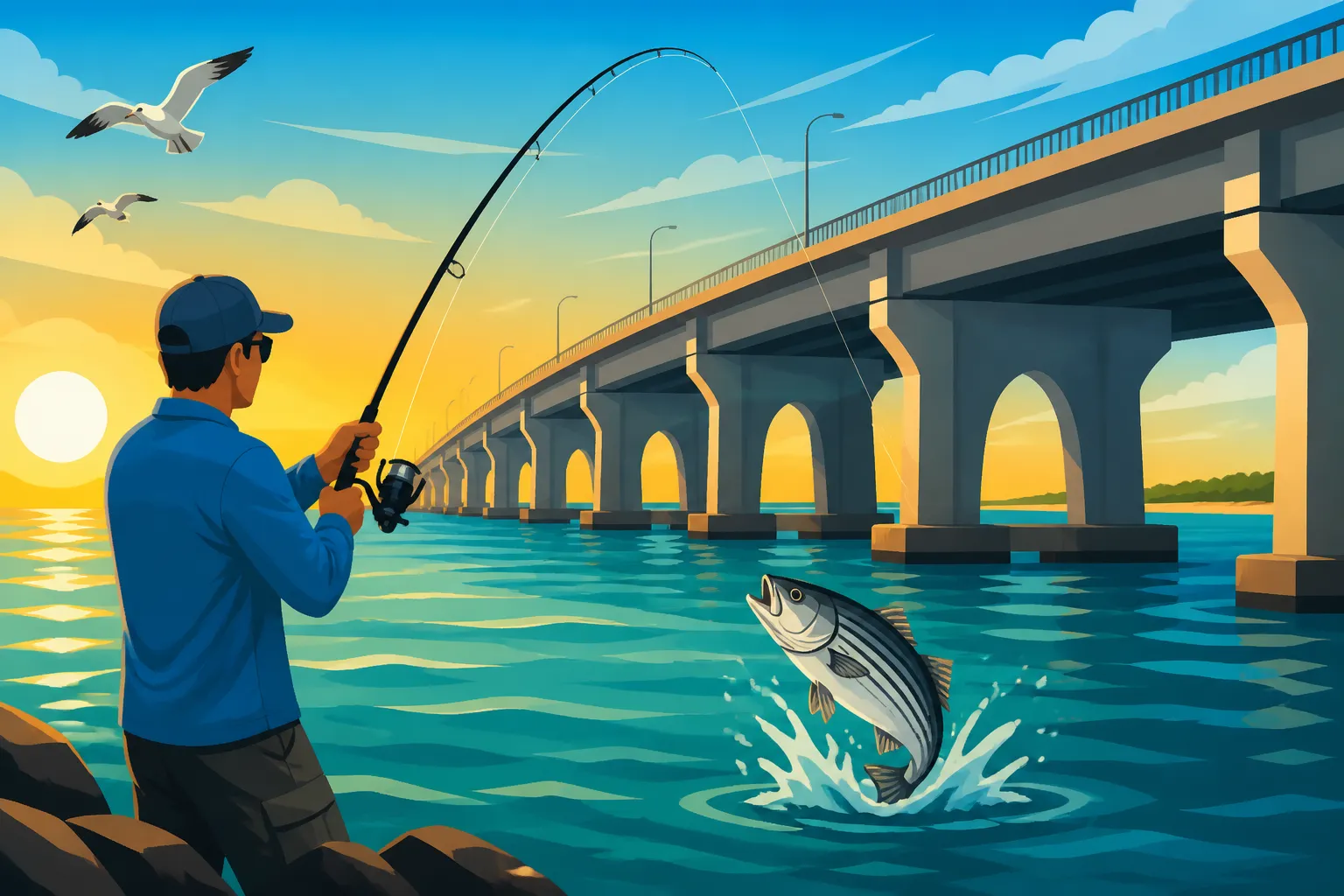
The Route 90 bridge acts as a natural choke point for baitfish moving in and out of the bay, making it a prime hunting ground for predatory species like striped bass (rockfish) and bluefish. These powerful fighters are often found lurking in deeper pockets or around the strongest currents, waiting for an easy meal. Early mornings and late evenings, or even night fishing under the bridge lights, can be especially productive for these species when they're most actively feeding.
For striped bass, live lining spot or eels is incredibly effective, especially around the bridge pilings. Heavy jigs, swim shads, or topwater plugs (during low light conditions) can also draw aggressive strikes. For bluefish, which are notorious for their sharp teeth and voracious appetites, any shiny metal jig or a chunk of fresh cut bait will usually do the trick. Just be prepared for a fight, as these fish hit hard! Always be aware of the Maryland Striped Bass Season and Rockfish Rules, as they are strictly enforced to protect this iconic species. While the bridge may not be the primary spot for trophy rockfish, you can certainly land respectable keepers here.
Speckled Trout, Croaker, and Spot: Diverse Offerings
Beyond the main attractions, the Route 90 bridge area is home to a host of other exciting catches. Speckled trout, with their beautiful spotted flanks, are often caught in cooler months, preferring soft plastic baits or MirrOlure plugs retrieved slowly near the bottom. They are a prized catch for their delicate flavor and spirited fight.
During the warmer summer months, croaker and spot move into the bay in large numbers. These panfish favorites offer consistent action, especially for family outings or beginner anglers. They respond well to bottom rigs baited with small pieces of bloodworm, shrimp, or squid. Fishing for them typically involves casting a bottom rig out and waiting for the tell-tale tap-tap-tap. They're excellent eating and provide a lot of fun. The diversity of fish means there's almost always something biting, making the Route 90 bridge a reliable spot throughout much of the year, provided you adjust your tactics to the season.
Mastering Techniques and Tackle for Bridge Fishing
Fishing around bridges requires a slightly different approach than open water or flat bottom fishing. The currents, structure, and potential for snags mean you need to be strategic with your gear and methods.
Rigging for Success Around Structure
When you're fishing near bridge pilings or rip-rap, snags are almost inevitable if you're not careful. The bottom here is often littered with rocks, old debris, and other obstacles that love to claim your tackle. To minimize loss, consider using a high-test main line (braid is excellent for its sensitivity and strength) with a fluorocarbon leader that offers good abrasion resistance. For bottom fishing, using a "fish finder" rig with a sliding sinker can be beneficial, as the sinker can get hung up while your bait, on a separate leader, might remain free.
Alternatively, a simple jig head paired with a soft plastic can be very effective, allowing you to feel the bottom and retrieve quickly if you encounter resistance. For flounder, a traditional two-hook bottom rig with a heavier sinker to hold against the current is standard. Make sure your knots are solid; there's nothing worse than losing a good fish or an expensive lure to a weak knot. Many experienced anglers fishing this area carry extra terminal tackle, knowing that snags are part of the game.
| Species Targeted | Best Time to Fish | Recommended Bait/Lure | Ideal Tackle Setup | Common Frustration |
|---|---|---|---|---|
| Flounder | Incoming Tide | Live Minnows, Squid, Gulp! | Light-Medium spinning, 10-15lb line | Snags on bottom |
| Striped Bass | Dawn/Dusk, Night | Live Spot/Eel, Jigs, Topwater | Medium-Heavy spinning/casting, 20-30lb line | Strong current, boat traffic |
| Bluefish | High Tide | Cut Bait, Metal Jigs, Spoons | Medium-Heavy spinning, 20lb leader | Toothy critters cutting line |
| Speckled Trout | Cooler Months | Soft Plastics, MirrOlures | Light-Medium spinning, 10-15lb line | Finicky bites |
| Croaker/Spot | Summer Evenings | Bloodworms, Shrimp, Squid | Light spinning, 6-10lb line | Small hooks, constant re-baiting |
Best Bait and Lure Choices
The type of bait or lure you choose will depend heavily on your target species and the time of year. For flounder, nothing quite beats a live minnow (like a mud minnow or bull minnow) hooked through the lips, or a fresh strip of squid. However, artificials like the Berkley Gulp! Alive! line of baits are incredibly effective and can often out-fish live bait due to their scent dispersion. When it comes to bluefish, their aggressive nature means they'll hit just about anything shiny or smelly. Metal jigs, spoons, and cut bait like mullet or bunker work great.
For striped bass, live bait is king, especially bunker, spot, or eels. If you're throwing artificials, large swimbaits, bucktails, or topwater plugs can be explosive. When fishing for croaker and spot, small pieces of bloodworm are irresistible, though shrimp and small strips of squid also produce. Remember that the Best Bait for Flounder in Ocean City will differ from what you use for striped bass, so always match your offering to your target. Having a variety of baits and lures on hand will give you the flexibility to adapt to changing conditions and target multiple species.
When and Where to Cast
Timing your casts and understanding where fish hold is paramount. For bridge fishing, the tides play a huge role. Generally, an incoming or outgoing tide (moving water) is best, as it concentrates bait and makes predators more active. Slack tide can be slower, though sometimes it allows fish to spread out more, making them harder to pinpoint. Knowing the current and how it flows around the pilings is key. Fish often sit in eddies or behind structure, waiting for food to wash by. Casting upstream and letting your bait or lure drift naturally with the current past these ambush points can be incredibly productive.
If you're fishing from shore, try casting parallel to the bridge structure or into the current seams. If you're in a kayak or small boat, you have the advantage of being able to position yourself closer to the pilings, fan-casting around them. Always be mindful of other anglers and boat traffic, especially in busy channels. While it's not the Chesapeake Bay, understanding how tides affect fishing in Maryland's back bays, including the Isle of Wight, is crucial for success. Consider looking up tide charts for the Ocean City area before you head out.
Essential Tips for a Successful and Safe Trip
Fishing the Route 90 bridge can be incredibly rewarding, but it comes with its own set of considerations, particularly regarding safety and regulations. Being prepared will make your experience much more enjoyable.
Navigating Regulations and Licenses
Before you even wet a line, make sure you're properly licensed. In Maryland, fishing regulations can vary depending on whether you're in tidal or nontidal waters, and the Isle of Wight Bay is certainly tidal. Most saltwater fishing in Maryland requires a Chesapeake Bay & Coastal Sport Fishing License, which covers most species you'd encounter around the Route 90 bridge. Non-residents will need a specific Maryland Nonresident Fishing License Cost, and there are different options like the Maryland 7-Day Fishing License Options for visitors. Kids typically don't need a license under a certain age, but it's always best to check the latest rules on whether Do Kids Need a Fishing License in Maryland?
Additionally, even if you're not keeping anything, you need to be aware of the Maryland Saltwater Angler Registration Requirements. This is a free registration that helps the state gather important data on fishing effort. Failing to comply can lead to fines, so it’s always better to be safe than sorry. You can usually purchase or renew your license quickly online through the Maryland Department of Natural Resources website. For a complete overview, our Maryland Fishing License Guide for 2026 is an excellent resource to ensure you're squared away.
Safety First: Fishing Near a Busy Bridge
Safety is paramount when fishing around any bridge, especially one with active boat and vehicle traffic like Route 90. If you're fishing from shore, be aware of cars and keep your distance from the roadway. Never climb on the bridge structure itself. If you're on the water in a kayak or small boat, wear your personal flotation device (PFD) at all times. The currents can be strong, and boat traffic, particularly during peak season, can be heavy. Stay clear of navigation channels and keep a watchful eye out for larger vessels.
Consider bringing a buddy, especially if you're venturing out in a kayak or during non-daylight hours. A whistle or other signaling device is also a good idea. The weather can change quickly on the water, so check the forecast before you go and be prepared to head in if conditions deteriorate. While the fishing can be great, no catch is worth risking your safety. Many local charter captains, some of whom you can find on platforms like FishingBooker, are intimately familiar with these waters and adhere to strict safety protocols, offering valuable lessons even if you're not booking a trip.
Maximizing Your Experience: What Else to Bring
Beyond your rod, reel, and tackle, a few other items will significantly enhance your bridge fishing experience. A good pair of polarized sunglasses will help you spot structure and fish in the water, reducing glare. Sunscreen and a hat are non-negotiable, especially during the summer. A cooler with plenty of water and snacks will keep you comfortable and hydrated. If you plan to keep your catch, make sure you have ice and know the Maryland Fishing Size and Catch Limits by Species before you head out.
A multi-tool or pliers are invaluable for cutting line, removing hooks, and making quick adjustments. A small flashlight or headlamp is crucial if you're planning to fish during low light or after dark. Lastly, bringing a small first-aid kit for minor cuts or scrapes is always a smart move. And remember, the best time of year to fish in Maryland can vary, so adjusting your gear and expectations to the season will yield the best results.
If you're looking for local insights or even to book a guided trip that might fish these areas, exploring options on FishingBooker can connect you with experienced captains who know the Route 90 bridge like the back of their hand. They can offer tips, take you directly to the hot spots, and ensure a memorable outing. Whether you're casting from shore or navigating a kayak, the Route 90 bridge offers an exciting and often productive angling adventure in Ocean City.
Disclaimer
Fishing involves inherent risks, including but not limited to drowning, injury from hooks or sharp objects, and exposure to the elements. Always prioritize your safety and be aware of your surroundings. Adhere to all local, state, and federal fishing regulations, including licensing requirements, size, and creel limits. The information provided in this guide is for informational purposes only and should not be considered a substitute for professional advice or strict adherence to safety guidelines. Conditions can change rapidly, and personal responsibility is paramount.