Best Time to Surf Fish for Striped Bass at Assateague
Trying to figure out the absolute sweet spot for surf fishing for striped bass at Assateague Island can feel like trying to catch a ghost – sometimes they're there, sometimes they're not, and it's easy to get frustrated when you put in the effort and come up empty-handed. This guide is here to cut through the guesswork, helping you understand the key factors that influence when these magnificent fish are most likely to be biting off Maryland's picturesque coast.
Understanding the Striped Bass Migration and Seasons at Assateague
When you're talking about striped bass, or "rockfish" as we lovingly call them here in Maryland, you're talking about a highly migratory species. Their movements are largely dictated by water temperature and their need to spawn and feed. This means that the "best time" to catch them from the surf at Assateague isn't a single day or even a single month, but rather a series of windows that open and close throughout the year, each with its own unique characteristics.
The Spring Run: A Time of Anticipation
Spring on Assateague Island is a period of renewed hope for surf anglers. As the waters of the Atlantic Ocean begin to warm up after the long chill of winter, usually starting in late March and peaking in April and early May, striped bass begin their migration northward from their wintering grounds. These fish are often post-spawn, making their way back from the Chesapeake Bay and other spawning rivers, and they are hungry. This is a prime time to target them from the beach.
The key here is watching the water temperature. Once it consistently hits the mid-40s to low 50s Fahrenheit, the stripers are usually not far behind. During this spring run, you'll often find a mix of fish, from schoolie stripers to some truly respectable keepers. They're actively feeding to regain energy, making them more aggressive and willing to strike a variety of baits and lures. Anglers often focus on areas where baitfish are congregating close to shore, or along the deeper sloughs and cuts that form in the surf. This is also when you might see larger "trophy" fish passing through, though they can be more elusive from the surf. For more on their seasonal movements, check out our guide on how the tides affect fishing in Maryland's Chesapeake Bay.
Summer Slowdown and Nocturnal Pursuits
Once the scorching heat of late May and June really sets in, and ocean water temperatures consistently climb into the upper 60s and 70s, surf fishing for striped bass at Assateague tends to slow down significantly during daylight hours. The larger stripers often move into deeper, cooler waters offshore or further north, making them harder to reach from the beach. However, this doesn't mean the bite completely shuts off. It just means you need to adjust your approach.
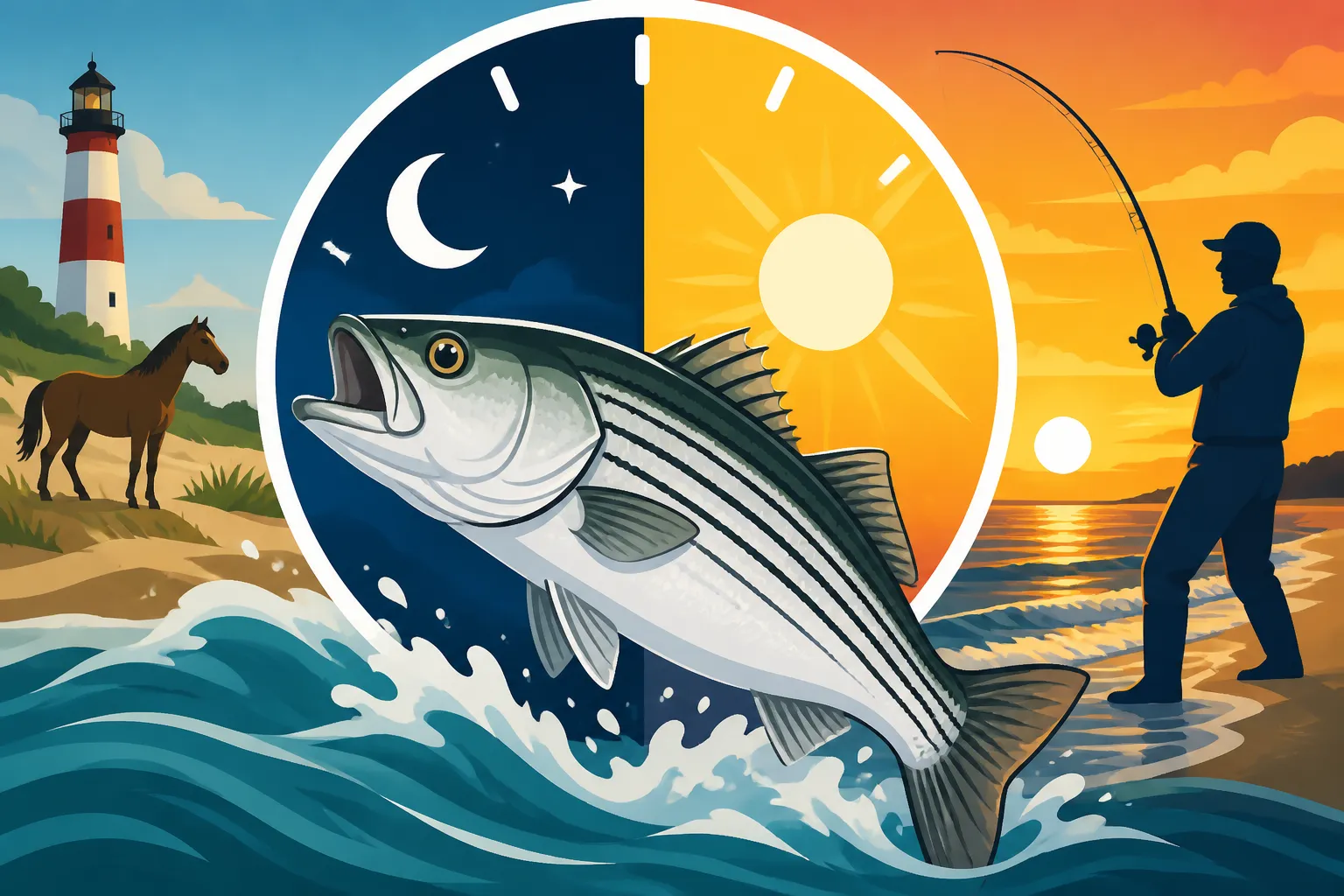
During the summer, your best bet for catching striped bass from the Assateague surf is often under the cloak of darkness. Night fishing becomes incredibly productive as the water temperatures cool slightly and the fish feel safer moving into shallower areas to feed. The low light also provides an ambush advantage for the stripers as they hunt baitfish like mullet and spearing that venture close to the shoreline. Don't be surprised if your biggest catches of the year come from a summer night session. You'll also likely encounter other species like bluefish, croaker, and even red drum during these warmer months, so it pays to be prepared for a mixed bag.
The Energetic Fall Migration
For many seasoned Assateague surf anglers, the fall run is the absolute pinnacle of striped bass fishing. Beginning in September, gaining momentum through October, and often lasting well into November, this is when the stripers truly go on a feeding frenzy as they migrate south for the winter. The water temperatures are cooling, mimicking their preferred comfort zone, and the beaches are often teeming with various baitfish, creating ideal conditions for an epic bite.
During the fall, striped bass are focused on bulking up for their long journey and the leaner winter months. This means they're not nearly as finicky as they might be during other times of the year. You can often find schools of fish actively chasing bait right in the wash, creating exciting opportunities for both bait and lure fishermen. The cooler, crisp air, combined with the sheer number of fish, makes this a truly special time to be on the beach. It's not uncommon for multiple fish to be caught by a single angler in a short period, and trophy-sized fish are definitely a strong possibility. Understanding the overall Maryland Striped Bass Season and Rockfish Rules is crucial during these busy months.
Daily Rhythms: Tides, Dawn, Dusk, and Night Fishing
Beyond the broader seasonal movements, the daily rhythms of the ocean also play a huge role in determining the best time to wet a line for striped bass from the Assateague surf. Ignoring the tides or fishing only in the middle of a sunny day can drastically reduce your chances of success.
The Impact of Tides on Surf Fishing Success
Tides are arguably the most critical factor in surf fishing. While the exact "best" tide can vary slightly depending on the specific stretch of beach and the time of year, a moving tide is almost always better than a slack tide. Moving water creates current, which dislodges bait from the bottom, washes food into the surf zone, and positions predator fish like striped bass in ambush points.
Many anglers swear by the last two hours of the incoming tide and the first two hours of the outgoing tide. This period, often called the "prime tide window," sees water moving over sandbars and into sloughs, bringing baitfish within striking distance of the stripers. The rising tide can push fish closer to shore, while the falling tide can concentrate them in deeper channels as water recedes. It's essential to understand how to read a sandbar for surf fishing, as these underwater structures are magnets for bait and predators. When the water is slack, meaning neither moving in nor out, fishing can often be slow, as the bait isn't as active, and the fish tend to be less aggressive.
Golden Hours: Dawn and Dusk
Just like in many other forms of fishing, the hours around sunrise and sunset are often referred to as the "golden hours" for surf fishing for striped bass. The reduced light conditions during dawn and dusk provide a significant advantage for predatory fish. The low light makes it harder for baitfish to spot incoming dangers, and it can make a fish less wary of approaching your bait or lure.
In addition to the light conditions, these times often coincide with slightly cooler air and water temperatures, especially during the warmer months. Fish that might have been holding in deeper, cooler water during the day often move into the shallower surf zone to feed under the cover of low light. If you can combine these golden hours with a favorable moving tide, you're setting yourself up for some of the best possible opportunities to connect with a striper from the Assateague beach.
Embracing the Darkness: Night Fishing for Stripers
As mentioned earlier, night fishing truly comes into its own for striped bass at Assateague, especially during the summer and early fall. The darkness provides the ultimate cover for these wary predators, allowing them to hunt aggressively in waters they might avoid during the day. The absence of boat traffic and human activity on the beach also makes them more comfortable moving into the shallowest parts of the surf.
When fishing at night, visibility is obviously a challenge, so come prepared with headlamps (red light helps preserve night vision), glow sticks for rod tips, and a clear understanding of your surroundings. Many night anglers swear by louder, more intrusive lures that create a strong vibration or silhouette in the dark, as well as natural baits like fresh cut bait. Safety is paramount when night fishing; always let someone know where you're going and when you expect to return. This technique is a crucial part of effective Surf Fishing Techniques for the Maryland Coast.
Weather and Water Conditions: The Unpredictable Factors
Even if you're hitting the peak season during a golden hour, the day's specific weather and water conditions can make or break your trip. Assateague Island's open coastline is constantly exposed to the elements, and understanding how these factors influence striped bass behavior is key to consistent success.
Wind, Waves, and Water Temperature
-
Wind: Wind direction and speed significantly impact surf conditions. A strong onshore wind (blowing from the ocean towards the beach) can create rough, churned-up water, which, while challenging to fish in, can be excellent for stripers. This rough water dislodges bait, creates current, and offers camouflage for feeding fish. However, too much wind can make casting impossible and create dangerous conditions. A light offshore wind (blowing from the land towards the ocean) can flatten the surf, making for calmer casting but sometimes less productive fishing, as the water lacks that "stripes love" churn.
-
Waves: The right amount of wave action is your friend. A moderate surf, often described as a "nice roll" or "wash," is ideal. It creates aerated water and current, which are perfect for striped bass hunting. Big, crashing waves can make it difficult to hold bottom with bait or work lures effectively, and they can also make it unsafe to be in the surf. Too flat of a surf, on the other hand, can sometimes mean less activity.
-
Water Temperature: As discussed with seasonal movements, water temperature is paramount. Striped bass are cold-blooded and their metabolism is directly affected by the water temperature. They thrive in a range generally between 50-68°F. Too cold, and they become lethargic; too warm, and they seek deeper, cooler water. A sudden drop or rise in temperature can also temporarily put them off the bite. You can find reasonably priced waterproof thermometers on sites like Amazon to help you gauge conditions before or during your trip.
Reading the Beach: Structure and Current
The contour of the beach changes constantly with tides and storms, creating temporary "structure" that is vital for surf fishing success. Understanding these features and how current interacts with them is like having a secret map to where the fish are hiding.
-
Sandbars and Sloughs: These are your primary targets. Sandbars are elevated sections of the bottom, often visible as waves break further out. The deeper water between the sandbar and the beach is called a slough or trough. Striped bass will cruise these sloughs, especially the "first slough" closest to shore, looking for baitfish trapped by the receding tide or washed in by waves. Casting beyond the first sandbar and retrieving through the slough is often highly effective.
-
Cuts and Rip Currents: Cuts are deeper channels or breaks in the sandbar where water rushes in or out with the tide. These are absolute magnets for fish, as they act as highways for baitfish and ambush points for predators. Rip currents, while potentially dangerous for swimmers, are essentially strong outgoing currents, often visually identifiable by a gap in the breaking waves or a stream of discolored water moving out to sea. Fish often stage on the edges of these rips, waiting for food to be swept past them. Learning how to read the beach for these features is a skill that comes with practice and can significantly improve your catch rates. Our guide on How to Read a Sandbar for Surf Fishing can give you a head start.
Gear and Techniques for Optimal Timing
Having the right equipment and knowing how to use it effectively for specific conditions can dramatically increase your chances of success, especially when you've identified the "best time" to be fishing.
Essential Gear for Assateague Surf Fishing
To maximize your opportunities for striped bass from the Assateague surf, you'll need gear that can handle the elements and reach the fish.
- Surf Rod and Reel: A sturdy surf rod, typically 9 to 12 feet long, paired with a robust spinning reel, is essential for casting heavy weights and baits into the waves. Look for reels with good line capacity and a smooth drag system, built to withstand saltwater exposure. Many anglers opt for a braided main line, offering sensitivity and casting distance, often with a monofilament or fluorocarbon leader.
- Terminal Tackle: You'll need a variety of weights (pyramid or Sputnik sinkers are popular for holding bottom in current), hooks (circle hooks are often preferred for their effectiveness and ability to reduce gut-hooking), swivels, and various types of rigs, such as fish-finder rigs or Pompano rigs. Having a tackle box stocked with these essentials, easily ordered from a retailer like Amazon, will save you a lot of frustration on the beach.
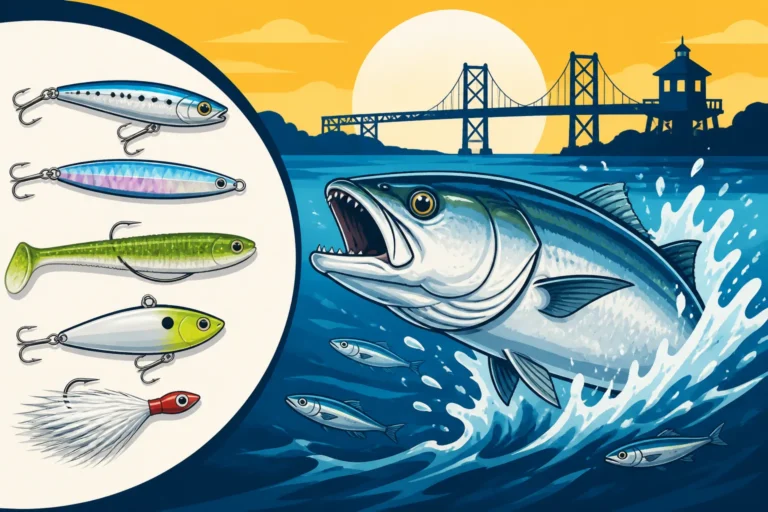
- Bait and Lures: For bait, fresh cut bait (like bunker, mullet, or spot) is often king, especially at night or when the bite is slow. Live bait, if allowed and available, can also be highly effective. For lures, bucktail jigs, large swim shads, metal casting spoons, and poppers (especially at dawn/dusk for active fish) are all excellent choices. Varying your presentation until you find what the fish want is key. More details can be found in our comprehensive guide on Maryland Striped Bass Fishing Techniques.
- Waders and Apparel: Good quality chest waders are often a must, allowing you to get past the initial wash and into a better casting position or to retrieve fish. Dress in layers, as conditions on the beach can change quickly, and always prioritize sun protection with hats, sunglasses, and appropriate clothing.
Baits and Lures for Different Conditions
The "best" bait or lure is often dictated by the specific conditions and the feeding preferences of the striped bass on any given day. Adaptability is your greatest asset.
- Cut Bait for Bottom Fishing: When the water is rough, discolored, or at night, cut bait fished on a fish-finder rig is often incredibly effective. The scent trail it puts out can attract stripers from a distance, and it stays put better in strong currents. This is especially true for the Fall Striped Bass Run when fish are aggressively feeding. You can learn more about specific offerings in our guide to the Best Bait for Surf Fishing at Assateague Island.
- Lures for Active Fish: If you see birds diving, baitfish showering, or active fish breaking the surface, this is your time to shine with artificial lures. Poppers, pencils, and other topwater lures can create exhilarating strikes. Subsurface lures like bucktail jigs, swim shads, and metal spoons are excellent for working the sloughs and cuts, imitating a fleeing baitfish. Casting and retrieving parallel to the beach, or fanning your casts out to cover different depths, can help you locate where the fish are holding.
- Matching the Hatch: Always try to use baits or lures that mimic the predominant baitfish in the area. If mullet are running, a mullet-colored lure or a piece of cut mullet will likely be more effective. If the water is clearer, a more natural-looking presentation might be best. Carrying a variety of options and experimenting is part of the fun and challenge of surf fishing.
Remember, surf fishing for striped bass at Assateague is as much about patience and persistence as it is about hitting the "perfect" window. By understanding the seasonal migrations, daily rhythms, and environmental factors, you'll dramatically improve your chances of success and truly experience the thrill of connecting with these magnificent fish from the Maryland coast.
Disclaimer
This article is for general informational purposes only and does not constitute professional advice. Laws, prices and regulations vary by location and change over time. Consult a qualified professional for guidance on your specific situation.