Best Tide for Fishing the Chesapeake Bay
It's happened to every angler out on the vast expanse of the Chesapeake Bay: you get to your favorite spot, the weather's perfect, your gear is dialed in, and then… nothing. The water is slick as glass, and the fish seem to have vanished into thin air. More often than not, the culprit isn't your bait or your technique, but the tide. Fishing the Bay without understanding its tidal currents is like trying to drive a boat blindfolded. This comprehensive guide will pull back the curtain on the mysterious, yet critical, role tides play in Maryland fishing, helping you unlock the secrets to more productive days on the water.
Understanding the Rhythm of the Bay: Tidal Basics for Anglers
The Chesapeake Bay is a massive estuary, a dynamic body of water where freshwater meets saltwater, and its every ebb and flow is dictated by the moon and sun. For us anglers, it's not just about the water level going up and down; it's about the currents, the movement, and how that influences every fish in the system. Ignoring this fundamental rhythm is one of the biggest mistakes you can make.
What is a Tide, Anyway?
At its simplest, a tide is the rise and fall of sea levels caused by the combined gravitational forces of the moon and the sun on the Earth's oceans. Think of it like a giant, invisible hand pulling on the water. As the moon orbits, it pulls the water towards it, creating a "bulge" (high tide) on both the side of the Earth facing the moon and the opposite side. In between these bulges, the water recedes, creating low tides.
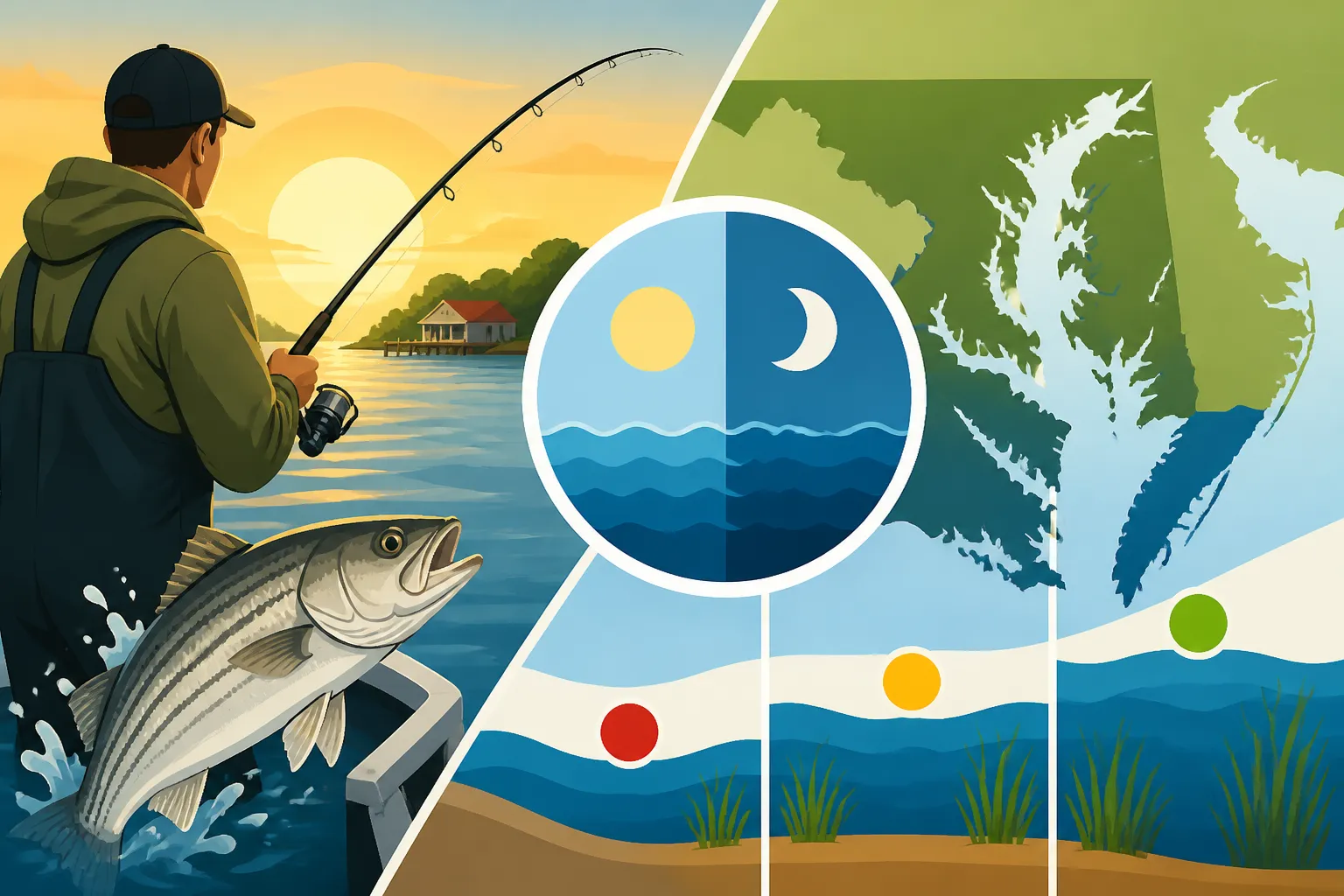
Here in the Chesapeake, we typically experience two high tides and two low tides each day, forming what's called a semi-diurnal tide cycle. What's crucial for us fishermen, though, isn't just the high and low water marks, but the movement of the water in between. When the water is moving in, that's an incoming or flood tide. When it's moving out, that's an outgoing or ebb tide. The period when the water briefly stops moving between these phases is called "slack tide." It's this continuous push and pull that drives the entire ecosystem, and consequently, our fishing success.
Why Tides Matter So Much for Chesapeake Bay Fishing
You might be thinking, "It's just water moving, how big of a deal can it be?" Believe me, it's monumental. Fish are opportunistic predators, and their entire lives revolve around finding food with the least amount of effort. Moving water does several things that directly impact their feeding patterns and locations:
- Bait Movement: Tides push and pull baitfish, crabs, and other forage organisms around. An oyster bed might be barren at slack tide, but as the current picks up, it can wash out countless small crabs and worms, turning it into a buffet line for hungry fish.
- Oxygenation and Water Quality: Moving water generally means better oxygenation, especially in shallower areas or during warmer months. It also helps to distribute nutrients and flush out stagnant areas.
- Ambush Points: Current creates natural ambush points. Fish, especially predatory species like striped bass, will position themselves in current breaks behind structure (pilings, points, wrecks, oyster reefs) where they can conserve energy and wait for bait to be swept to them. If there's no current, there's no advantage to these spots, and fish will disperse.
- Visibility: Stronger currents can sometimes stir up sediment, reducing visibility, which might make fish more reliant on other senses, or push them to clearer edges. Conversely, a gentle current might keep the water clear enough for sight feeding.
If you've ever spent hours on the Bay watching your rods sit motionless, only for the bite to suddenly turn on like a light switch, you were likely experiencing the shift in a tidal cycle. It's that critical.
Different Tidal Zones in the Bay
The Chesapeake Bay is enormous, stretching over 200 miles from its northern reaches to the Atlantic. This means the tidal influence isn't uniform. The further you get from the mouth of the Bay at Cape Charles, Virginia, and the ocean, the more delayed and less pronounced the tides become.
- Lower Bay (e.g., Solomons Island, Point Lookout): Closer to the ocean, these areas experience stronger currents and more predictable tidal swings. High and low tides are closer to what ocean forecasts predict.
- Middle Bay (e.g., Annapolis, Kent Island): Still very much tidally influenced, but the timings will be later than the lower Bay. Current speeds might be slightly less intense, but still crucial. Places like the Bay Bridge and its pilings are heavily affected by strong currents, making them prime spots when the tide is moving.
- Upper Bay (e.g., Havre de Grace, Susquehanna Flats): The tidal influence here is significantly diminished and often delayed by many hours compared to the Bay's mouth. Freshwater flow from rivers like the Susquehanna can also have a major impact, sometimes overriding or masking the tidal effect. In these areas, strong winds can often have a greater impact on water levels than the tide itself. However, even a subtle tidal push can concentrate fish.
- Tributaries: Each tributary (Patuxent, Choptank, Chester, Nanticoke, etc.) has its own micro-tides, which are further delayed and often weaker than in the main stem of the Bay. Understanding the tide for your specific river is key. You can find detailed local tide charts through services like the National Oceanic and Atmospheric Administration (NOAA) website or specialized fishing apps.
Knowing which tidal zone you're in helps you interpret tide charts and understand how much water movement to expect.
Deciphering the Best Tidal Movements for Success
While "moving water is good water" is a common adage among experienced Bay anglers, not all moving water is created equal. The speed, direction, and duration of the current all play a role in how fish respond. Learning to read these nuances is what separates the consistently successful angler from someone just hoping for luck.
The Power of Moving Water: Incoming and Outgoing Tides
Generally speaking, fish are most active and concentrated during periods of strong tidal flow – whether that's an incoming (flood) or outgoing (ebb) tide.
- Incoming Tide (Flood Tide): As the water pushes into the Bay and its tributaries, it often brings in cleaner, saltier water from the ocean. This can be fantastic for pushing baitfish into creeks, coves, and onto shallow flats, especially in the lower and middle Bay. Many species, particularly bottom feeders and those that forage in shallower waters, become highly active during the incoming tide.
- Scenario: Imagine fishing a creek mouth on the Eastern Shore as the incoming tide starts to fill it up. Baitfish like silversides and minnows get pushed further into the creek, and predatory species like white perch and smaller striped bass follow right behind them, ambushing them along the edges. This is often an excellent time for targeting species that frequent shallow marsh edges.
- Outgoing Tide (Ebb Tide): This is often considered the most productive tide by many Bay anglers, especially for larger predatory fish like striped bass. As the water drains out of the creeks, rivers, and shallow flats, it flushes baitfish, crabs, and other food sources out into deeper channels and main Bay waters. Fish will stage at the mouths of these tributaries or along channel edges, waiting for this buffet to be delivered.
- Scenario: Picture the mouth of the Choptank River. As the ebb tide begins to pull water out, all the forage that was feeding in the shallow marshes starts getting swept into the main river channel. Striped bass and bluefish will stack up at key points, like prominent channel edges or points of land, waiting for the current to bring their next meal to them. This is prime time for jigging or live-lining baitfish like spot near these transition zones. For more on catching these prized fish, check out our guide on Maryland Striped Bass Fishing Techniques.
The strength of the current during these phases is also critical. Too weak, and fish might be dispersed. Too strong, and bait might be swept past too quickly, or fish might expend too much energy fighting the current, moving to more sheltered areas. The ideal is a moderate to strong flow where fish can hold comfortably and ambush prey.
The "Slack Tide" Conundrum
Slack tide, the brief period when the water has stopped moving between high and low, often gets a bad rap among anglers. And for good reason: much of the time, the bite shuts down. Without current, the bait disperses, and the predatory fish that rely on current breaks lose their advantage and often become lethargic.
However, calling slack tide universally "bad" is an oversimplification. There are specific situations where it can still be productive:
- Deep Water Structure: In deeper water, where current isn't as critical for bait presentation or ambush points, fish might still be active, especially if they're congregating around wrecks, artificial reefs, or deep-water ledges. For instance, Black Sea Bass often hold tight to structure regardless of current.
- Suspended Fish: Sometimes, particularly in deeper channels or over open water, fish might be suspended in the water column, perhaps thermoclines, and are less influenced by surface currents. In these cases, vertical jigging or slow trolling can still elicit strikes.
- Specific Species: Some species, like bottom-dwelling catfish or certain panfish in less current-dominated areas, might feed more consistently throughout the tidal cycle, or even prefer the calmer periods. For those targeting species like Maryland Blue Catfish, an Invasive Giant, understanding their preferred depths and structures during slack water can make a difference.
For most Bay fishing, especially for striped bass, flounder, and white perch, you'll generally want to avoid peak slack tide if possible. The periods just before and after are usually far more promising.
The Sweet Spot: Peak Current and the "Bite Window"
The magic often happens not at the exact moment of high or low tide, but during the peak current flow and the hour or so leading up to and following it. This is the "bite window" that experienced anglers constantly chase.
Think about it: as the current builds in strength, it's pushing the most amount of bait past the most advantageous ambush points. Fish can easily hold in a current seam or behind a piling, letting the conveyor belt of food come right to them. Then, as the current starts to slow down, fish might become more active, moving out of their hiding spots to aggressively feed before the flow dies completely.
How do you find this sweet spot?
- Tide Charts: Use a reliable tide chart for your exact fishing location. These charts will often show predicted current speeds, not just high and low water times.
- Observation: Pay attention to the water. Look for current lines, eddies, and how floating debris (like grass or foam) moves. If you're drifting, note your speed.
- Local Knowledge: Talk to bait and tackle shops, especially those run by seasoned locals. They often have an uncanny sense of when the bite will turn on, which might differ slightly from official tide charts due to local bathymetry or wind effects. Places like Angler's Sport Center in Annapolis or Rod 'N' Reel in Chesapeake Beach are invaluable resources.
The bite window can be surprisingly short, sometimes only lasting 1-2 hours. Being in the right place at the right time during this crucial period can make or break your day.
Tailoring Your Approach: Species-Specific Tidal Strategies
Different fish species have different behaviors, and naturally, they react to tides in unique ways. Understanding these preferences can help you refine your techniques and increase your chances of success.
Striped Bass (Rockfish) and Tides
Maryland's state fish, the striped bass (or rockfish as we call them here), are highly attuned to tidal currents. They are ambush predators and masters of using current to their advantage.
-
Incoming Tide: Striped bass might move into shallower waters, around structure, or into the mouths of smaller creeks to chase baitfish being pushed in by the flood. This can be a great time for casting soft plastics or crankbaits around points and shallow bars.
-
Outgoing Tide: This is often prime time for striped bass in the Bay. As bait gets flushed out of the creeks and flats, rockfish will stage in deeper channels, along drop-offs, and around major structures like bridge pilings (like those of the Chesapeake Bay Bridge) or wrecks. This is when jigging with heavy spoons or soft plastics, or live-lining spot or eels, becomes incredibly effective. Trolling large swimbaits or bucktails along channel edges can also be very productive during a strong ebb tide. For more on specific techniques, consult Trolling vs Jigging for Maryland Striped Bass.
-
Current Breaks: Always look for current breaks. This means the calmer water just behind an obstruction (like a piling, a point of land, or even a change in bottom contour) where fish can sit comfortably out of the main current flow, waiting to dart out and grab passing prey. Casting your lure into the current and letting it sweep past these breaks is a killer strategy.
White Perch and Yellow Perch on the Tide
These delicious panfish are abundant in the Bay and its tributaries, and their feeding is also heavily influenced by tides.
-
Incoming Tide: White perch and yellow perch will often move into shallower areas, especially near docks, oyster beds, and submerged structure, to feed on small crabs, worms, and baitfish stirred up by the incoming water. This is an excellent time for bottom fishing with bloodworms or grass shrimp, or casting small spinnerbaits or jigs. During their spring spawning runs up the rivers, the incoming tide can help them push further upstream, concentrating them in specific areas. For more on these runs, see White Perch Spawning Runs in Maryland Rivers.
-
Outgoing Tide: As the tide recedes, perch often pull back from the very shallowest areas and concentrate along the edges of channels or deeper holes, waiting for food to be flushed out. This can be a great time for bottom fishing or jigging small lures directly over shell beds or hard bottom.
-
Subtle Currents: Perch generally prefer less violent currents than striped bass. A gentle to moderate flow is often ideal, as it brings food to them without forcing them to fight too hard.
Flounder and Bottom-Dwellers
Flounder are masters of camouflage, lying in wait on the bottom for unsuspecting prey. Their ambush strategy works best with moving water.
-
Incoming and Outgoing Tides: Both moving tides can be excellent for flounder. Flounder will position themselves on the bottom, often in sandy or muddy areas adjacent to channels, points, or structure. As the current sweeps by, it carries baitfish, minnows, and crabs directly over their heads. They'll face into the current, ready to pounce.
-
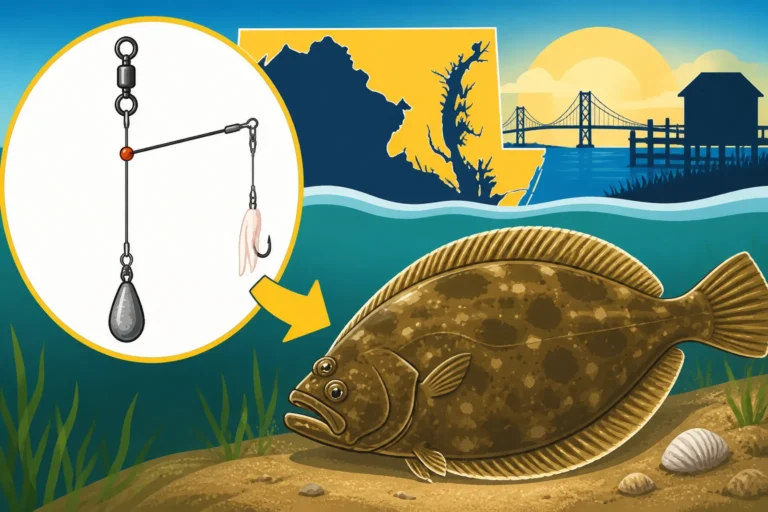
Drifting: Drifting with the tide is a highly effective way to cover ground and present bait naturally to flounder. Use a traditional flounder rig with a live minnow, cut bait (like squid or strips of spot), or Gulp! artificial baits. The key is to keep your bait on or very near the bottom as you drift. Stronger tides mean a faster drift, so you'll need heavier sinkers to maintain bottom contact. For a deeper dive into targeting this flatfish, check out our guide on Flounder Fishing in Maryland.
-
Slack Tide: Slack tide is generally poor for flounder, as there's no current to bring food to them, and they become less active.
Blue Catfish and Invasive Species
Invasive species like blue catfish and northern snakehead have adapted remarkably well to Maryland's tidal waters, and their feeding habits are also influenced by current.
- Blue Catfish: These robust fish thrive in the Bay's tidal rivers, such as the Potomac, Patuxent, and Nanticoke. They are opportunistic feeders and are very active during strong currents, both incoming and outgoing. They use their keen sense of smell to locate food.
- Strategy: During strong tidal flows, blue catfish will congregate in deeper channels, holes, and along current seams, especially where tributaries meet larger rivers. They often prefer to be on the bottom. Bottom fishing with fresh cut bait (like gizzard shad, menhaden, or even chicken liver) is extremely effective. The current helps disperse the scent of your bait, drawing them in from afar. Look for structure like submerged logs or bridge pilings where they can hold out of the main current but still ambush food. You can learn more about these fascinating invaders in our piece on Maryland Blue Catfish, an Invasive Giant.
- Northern Snakehead: While often found in shallower, vegetated areas, northern snakeheads in tidal rivers like the Potomac also respond to current.
- Strategy: During an incoming or outgoing tide, snakeheads might move out of dense lily pads or grass beds to patrol the edges, looking for baitfish being pushed by the current. Focusing on the transition zones between shallow, vegetated areas and slightly deeper, more open water during moving tides can be productive. Topwater lures like frogs or buzzbaits are excellent in these conditions, or spinnerbaits worked through sparse vegetation.
Practical Tips for Mastering Chesapeake Bay Tides
Understanding the theory is one thing, but putting it into practice out on the water takes a bit of planning and adaptability. Don't worry, it's easier than it sounds once you get the hang of it.
Using Tide Charts and Apps
This is your absolute best friend when planning a fishing trip on the Bay.
- Official NOAA Tide Charts: The National Oceanic and Atmospheric Administration (NOAA) provides free, highly accurate tide predictions for countless stations around the Chesapeake Bay. You can search by specific locations like "Annapolis, MD" or "Solomons Island, MD." These charts will give you the exact times for high and low tides, and often predict current speeds.
- Fishing Apps: Many popular fishing apps, such as Fishbrain, Fishing Points, or Tide Charts Near Me, integrate NOAA data and present it in a user-friendly format, often with moon phases and other relevant data. Some even show graphical representations of current flow. It's often worth the small subscription fee for premium features on some of these, especially if you fish frequently. You can find many reliable options on Amazon or your phone's app store.
- Plan Ahead: Always look at the tide chart a day or two before you plan to go out. Identify the periods of strong current and try to schedule your trip around those windows. If you can only go during a period of slack tide, adjust your expectations and techniques accordingly (e.g., focus on deeper structure, different species).
Local Knowledge and Experience
While charts are great, they're predictions. Real-world conditions can vary.
- Bait and Tackle Shops: These are goldmines of information. The folks working there are often avid local anglers themselves and get real-time reports from others. They can tell you if the bite is on, what tide it's happening on, and sometimes even the exact spot. A quick chat with the pros at a local shop like Tochterman's in Baltimore or Alltackle in Annapolis can save you hours of fruitless fishing.
- Talk to Other Anglers: Be polite and ask around at the boat ramp or local marinas. Most anglers are happy to share general info, especially if you're respectful and offer to share your own observations.
- Go Often and Learn: There's no substitute for time on the water. Keep a fishing log. Note the tide, time of day, weather, and what you caught (or didn't catch). Over time, you'll develop your own understanding of how tides affect your specific fishing spots and target species.
Adapting to Conditions: Wind, Moon, and Weather
Tides aren't the only factor at play. They interact with other environmental conditions, sometimes enhancing their effect, sometimes diminishing it.
- Wind: Strong winds, especially those blowing with or against the tide, can significantly alter water levels and current speeds. A strong northwesterly wind during an outgoing tide, for example, can supercharge the ebb, making for very low water. Conversely, a strong easterly wind can "pile up" water, leading to higher than predicted tides. Always check the wind forecast.
- Moon Phase: While the moon's gravitational pull causes tides, certain phases amplify this effect. New moons and full moons (called "spring tides") typically produce stronger tidal swings and more intense currents. Quarter moons ("neap tides") result in weaker tidal movements. This can be important when planning a trip; if you want strong current, aim for a spring tide.
- Rainfall and Freshwater Runoff: Heavy rainfall, particularly in the northern Bay and its tributaries, can introduce a massive amount of freshwater. This can temporarily override tidal predictions, especially in rivers, creating a dominant "river current" that flows downstream regardless of the astronomical tide. This runoff can also affect water clarity and salinity, which impacts fish behavior.
Being adaptable and observing these other factors will make you a much more successful angler. Don't just follow the tide chart blindly; use it as a guide, and then let your eyes and instincts tell you what's really happening on the water.
Here's a handy table summarizing typical tidal preferences for common Maryland species:
| Species | Preferred Tide Phase (General) | Best Current Strength (General) | Notes |
|---|---|---|---|
| Striped Bass | Outgoing Tide, Incoming Tide | Moderate to Strong | Excellent in current breaks. Outgoing flushes bait from creeks; incoming pushes bait onto flats. Often shut down at slack. |
| White Perch | Incoming Tide, Outgoing Tide | Gentle to Moderate | Both tides productive, especially around structure (docks, oyster beds). Good during spring runs. Can be found in less current at times. |
| Yellow Perch | Incoming Tide, Outgoing Tide | Gentle to Moderate | Similar to white perch, often found in tidal rivers. Incoming tide pushes them into shallows; outgoing pulls them to deeper edges. |
| Flounder | Incoming Tide, Outgoing Tide | Gentle to Moderate | Ambushes prey on the bottom. Best when drifting with the tide to cover ground. Less active during slack tide due to lack of bait movement. |
| Blue Catfish | Incoming Tide, Outgoing Tide | Moderate to Strong | Highly active in tidal rivers, especially on bottom in channels. Current spreads bait scent. Can be caught throughout the day, but moving water is key for active feeding. |
| Northern Snakehead | Incoming Tide, Outgoing Tide | Gentle to Moderate | Often found in vegetated shallows, but will move to edges of cover during moving water to ambush prey. Topwater action can be great during these times. |
| Black Drum | Incoming Tide, Outgoing Tide | Gentle | Bottom feeders, often around oyster beds and clam beds. Gentle current helps disperse scent. Can be active at slack water if on a strong feed, but moving water helps. |
| Croaker & Spot | Incoming Tide | Gentle to Moderate | Popular bottom fish. Incoming tide often pushes them into shallower areas and near structure where they feed on small invertebrates. |
| Red Drum | Outgoing Tide, Incoming Tide | Moderate | Often found in inlets, rips, and near structure along the coast and lower Bay. Stronger currents can concentrate them. |
No matter where you are on the Chesapeake Bay, from the bustling harbors of Baltimore to the quiet creeks of the Eastern Shore, the tide is an undeniable force. Learning to read it, plan around it, and adapt to it will elevate your fishing game and put more fish in your boat or on your line. Happy fishing!
Disclaimer
Fishing conditions and regulations in Maryland can change frequently. Always consult the latest Maryland Department of Natural Resources (DNR) rules and regulations before heading out on the water. This guide is for informational purposes only and should not be considered a substitute for official guidelines or professional advice.